The Role of Structural Steel in Green Building and Sustainability

As the construction industry in Ontario shifts toward a “net-zero” future, the materials we choose matter more than ever. Sustainability is no longer just a buzzword; it is a requirement for modern building permits and LEED (Leadership in Energy and Environmental Design) certification.

Structural steel stands at the forefront of this green revolution. Often perceived as a heavy industrial material, steel is actually one of the most sustainable and “circular” building materials available today.

1. 100% Recyclability: A Circular Economy

Unlike concrete, which often ends up in landfills after demolition, steel is the most recycled material on the planet.

  • Infinite Lifecycle: Steel can be melted down and repurposed infinitely without losing its structural integrity.

  • Recycled Content: In North America, the average structural steel beam contains over 90% recycled steel. When you build with steel from Weld Rich & Steel, you are likely using material that was once an old car or a bridge, transformed into a high-performance structural component.

2. Reducing Construction Waste

Traditional construction sites often produce massive amounts of waste due to on-site cutting and errors. Metal fabrication changes that:

  • Off-Site Precision: At our fabrication shop, we use advanced software to nest parts perfectly on a single sheet or beam, minimizing off-cuts.

  • Minimal Site Impact: Because steel components arrive pre-cut and ready for assembly, there is virtually zero waste produced on the construction site. This keeps the project cleaner and reduces disposal fees for the property owner.

3. Speed of Construction and Energy Efficiency

Sustainability also relates to how efficiently a project is completed.

  • Lower Carbon Footprint: Faster construction times mean fewer months of heavy machinery running on-site, lower fuel consumption, and less disruption to the local ecosystem.

  • Integration with Insulation: Modern steel framing allows for the easy installation of high-performance “thermal break” insulation. This reduces the energy required to heat and cool buildings during Ontario’s extreme seasonal temperature swings.

4. Adaptability and Building Longevity

The greenest building is the one that doesn’t need to be torn down.

  • Future-Proofing: Steel structures are uniquely adaptable. If a commercial building needs to be converted into residential lofts 20 years from now, steel beams can be reinforced or modified far more easily than reinforced concrete walls.

  • Longevity: With proper finishes like hot-dip galvanizing, a steel structure can last over 100 years, drastically reducing the need for new raw materials in the future.

5. Contributing to LEED Certification

For developers in the GTA, achieving LEED certification can lead to tax incentives and higher property values. Using structural steel contributes points in several categories:

  • Materials and Resources: Due to high recycled content and regional sourcing.

  • Waste Management: Thanks to the precision of the fabrication process.

  • Innovation in Design: By allowing for larger windows (maximizing natural light) through long-span steel beams.

Conclusion: Building for the Next Generation

Choosing structural steel is an investment in both your property and the environment. At Weld Rich & Steel, we take pride in being part of a sustainable supply chain that supports Ontario’s green building goals. By combining high-strength steel with precision fabrication, we help you build structures that are safe, durable, and ecologically responsible.
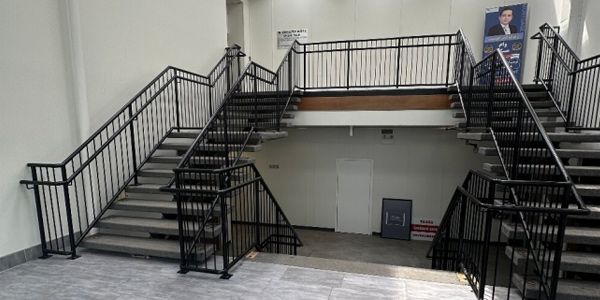
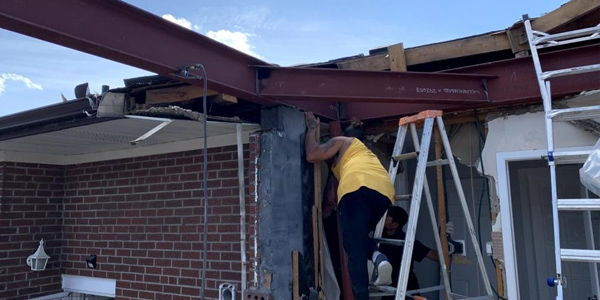
Custom Steel Staircase Design Trends in Toronto’s Metal Fabrication Industry

The staircase is no longer just a functional path between floors; it has become the sculptural centerpiece of the modern Toronto home and commercial office. In the local metal fabrication industry, we have seen a massive shift toward designs that prioritize light, transparency, and “floating” aesthetics.

At Weld Rich & Steel, we’ve tracked these changes from the industrial lofts of Liberty Village to the luxury residences of the Bridle Path. Here are the leading design trends defining custom steel staircases in 2026.

1. The Rise of the Mono-Stringer (Floating Stairs)

The most dominant trend in Toronto residential design remains the mono-stringer. By using a single, heavy-duty structural steel beam centered under the treads, the staircase appears to float in mid-air.

  • Why it’s trending: It allows light to flow through the space, making narrow Toronto floor plans feel much larger and more open.

  • Fabrication Challenge: This requires extreme precision. Any slight misalignment in the shop becomes visible on-site. We use CWB-certified welding to ensure the single spine is rigid and vibration-free.

2. Industrial-Chic with a “Soft” Finish

While the “raw industrial” look (exposed welds and blackened steel) is still popular, it has evolved into a more refined version.

  • The Look: Slimmer profiles, hidden fasteners, and matte powder-coated finishes (usually in “Sandtex Black” or “Charcoal Grey”).

  • Mixed Materials: We are seeing a high demand for steel frames paired with thick white oak treads or reclaimed wood, blending the strength of metal with the warmth of natural materials.

3. Glass Guardrails and Minimalist Hardware

Safety no longer has to be bulky. The trend is to make the protective barrier as invisible as possible.

  • Standoff Systems: Using stainless steel standoffs to mount glass panels directly to the side of the steel stringer.

  • Top-Rail Minimalism: Replacing thick handrails with slim, rectangular steel profiles or even eliminating them entirely where code permits (using recessed wall-mounted rails).

  • The “Clear” Advantage: In high-end commercial spaces, glass guardrails allow for unobstructed views of architectural features.

4. Perforated Steel and Laser-Cut Patterns

For those looking for a unique alternative to glass or pickets, perforated metal is making a huge comeback.

  • Custom Patterns: Using laser-cut steel panels with geometric or organic patterns as the guardrail.

  • Functional Art: These panels act as a privacy screen while still allowing light and air to pass through, creating beautiful shadow patterns during the day.

5. Integrated LED Lighting

Technology has found its way into staircase fabrication. We are increasingly being asked to “pre-route” steel stringers or treads to house LED strips.

  • Safety & Style: Under-tread lighting highlights the “floating” effect at night and provides a soft, safe path without the need for bright overhead lights.

  • Technical Integration: This requires close collaboration between our fabricators and electricians to ensure the wiring is completely hidden within the steel hollow sections.

6. Sustainable and Reclaimed Steel

In line with Toronto’s push for Green Building, clients are asking about the origin of their materials.

  • The Eco-Trend: Using structural steel with high recycled content. Steel is 100% recyclable, making it the most sustainable choice for long-term interior design.

Conclusion: Engineering the Art of the Ascent

A custom staircase is a complex piece of engineering that must meet strict Ontario Building Code (OBC) requirements for rise, run, and load-bearing capacity. At Weld Rich & Steel, we bridge the gap between an architect’s vision and a structurally sound reality.

Exploring the Different Types of CWB-Certified Welding Processes

In structural steel fabrication, there is no “one-size-fits-all” welding method. The choice of process affects everything from the speed of construction to the structural integrity of the joint in extreme weather. At Weld Rich & Steel, our CWB-certified technicians are experts in several key welding processes, each selected based on the project’s specific engineering requirements.

Understanding these processes helps project managers and homeowners understand why a certain technique is chosen for their site or shop-fabricated components.

1. GMAW (Gas Metal Arc Welding) – Commonly Known as MIG

GMAW is the standard for high-speed, high-quality fabrication in a controlled shop environment. It uses a continuous solid wire electrode and a shielding gas (usually a mix of Argon and CO2) to protect the weld pool.

  • Best for: Indoor shop fabrication of beams, custom staircases, and stainless steel components.

  • Advantages: Extremely clean welds with very little slag. It allows for high productivity and deep penetration in thick structural steel.

  • Limitation: Cannot be used outdoors in windy conditions, as the wind will blow away the shielding gas, leading to porosity (weakness) in the weld.

2. FCAW (Flux-Cored Arc Welding)

FCAW is often considered the “big brother” of MIG welding. It uses a tubular wire filled with flux. As the wire melts, the flux creates its own protective gas and slag layer.

  • Best for: Heavy structural steel erection and on-site welding.

  • Advantages: Highly portable and much more tolerant of wind than MIG. It is excellent for thick plates used in industrial frames and heavy-duty lintels.

  • Why we use it: It provides high deposition rates, meaning we can complete large structural joints faster without sacrificing strength.

3. SMAW (Shielded Metal Arc Welding) – Commonly Known as Stick

This is the most traditional and versatile form of welding. It uses a consumable electrode (stick) coated in flux.

  • Best for: Outdoor repairs, mobile welding in Toronto’s winter, and hard-to-reach structural joints.

  • Advantages: It is the most “rugged” process. It doesn’t require gas tanks and can weld through minor surface rust or paint (though we always clean surfaces for CWB-level quality). It is the go-to for on-site emergency repairs.

  • Why it matters: When we are performing mobile welding on a rooftop or in a tight alleyway, SMAW ensures a code-compliant weld regardless of the environment.

4. MCAW (Metal-Cored Arc Welding)

A high-efficiency variation that combines the benefits of MIG and Flux-Core. It uses a metal-filled tubular wire.

  • Best for: Large-scale commercial projects requiring high-volume fabrication.

  • Benefits: It produces almost no slag and very little spatter, reducing the time needed for “finishing” and cleaning before painting or galvanizing.

5. How We Choose the Right Process

At Weld Rich & Steel, the selection process is governed by the Welding Procedure Specification (WPS) approved by the CWB. We consider:

  1. Environment: Is the work in our shop or on a windy construction site?

  2. Material Thickness: Thin-gauge architectural metal vs. 1-inch thick structural beams.

  3. Position: Is the weld being done on a table (flat) or overhead on a bridge support?

  4. Aesthetics: Does the weld need to be perfectly smooth for a visible staircase, or is it a hidden structural joint?

Expertise You Can Trust

A CWB-certified company doesn’t just “weld”—it applies the correct science to ensure the safety of the structure. By mastering these diverse welding processes, Weld Rich & Steel provides Ontario clients with a guarantee that every joint is engineered for maximum performance.

Stainless Steel Fabrication: 5 Most Common Industry Applications

While carbon steel is the workhorse of the construction industry, stainless steel is its high-performance counterpart. Known for its exceptional resistance to corrosion, heat, and chemical damage, stainless steel is the preferred material for environments where hygiene and longevity are non-negotiable.

In Ontario, from the food processing plants of the GTA to modern architectural landmarks, stainless steel fabrication plays a vital role. Here are the five most common applications where this premium alloy is indispensable.

1. Food and Beverage Processing

The food industry is perhaps the largest consumer of stainless steel fabrication. In Canada, health and safety regulations (such as CFIA standards) mandate materials that are non-porous and easy to sanitize.

  • Why Stainless Steel? The chromium-rich oxide layer prevents the metal from reacting with food acids or cleaning chemicals.

  • Applications: Custom-fabricated mixing tanks, conveyors, industrial sinks, and work surfaces. At Weld Rich & Steel, we focus on high-quality welds that eliminate “pits” where bacteria could grow.

2. Architectural and Decorative Elements

Modern architecture in Toronto heavily relies on the “clean” look of stainless steel. Unlike painted carbon steel, stainless steel maintains its luster with minimal maintenance.

  • AESS (Architecturally Exposed Structural Steel): Used in high-end lobbies, glass-and-steel guardrails, and exterior cladding.

  • Durability: Because it doesn’t rust, it is the ideal choice for handrails and entryways exposed to the heavy road salt used during Ontario winters.

3. Commercial Kitchens and Hospitality

Beyond food processing, the hospitality sector (restaurants, hotels, hospitals) requires custom stainless steel solutions that fit unique layouts.

  • Customization: Standard off-the-shelf equipment rarely fits perfectly. Professional fabrication allows for custom-sized exhaust hoods, backsplashes, and specialized shelving.

  • Heat Resistance: Stainless steel maintains its structural integrity at temperatures that would cause other metals to warp or oxidize.

4. Chemical and Pharmaceutical Manufacturing

In environments where aggressive chemicals are present, carbon steel would fail within months. Stainless steel, particularly grades like 316, provides the necessary chemical resistance.

  • Corrosion Resistance: The addition of molybdenum in 316-grade stainless steel makes it resistant to chlorides (salts) and acidic solutions.

  • Applications: Chemical storage tanks, specialized piping systems, and laboratory workstations.

5. Marine and Outdoor Infrastructure

Waterfront properties and marine environments are the most “hostile” for metal. The high moisture and salt content in the air lead to rapid oxidation.

  • Infrastructure: Custom brackets for docks, outdoor signage frames, and lighting fixtures.

  • Cost-Benefit: While the initial cost of stainless steel is higher than that of galvanized steel, the “total cost of ownership” is lower because it eliminates the need for repainting or replacement every 5-10 years.

Technical Note: Choosing the Right Grade

Not all stainless steel is the same. Our fabrication team typically works with two primary grades:

  1. Grade 304: The most common “all-purpose” stainless. Great for indoor use and food prep.

  2. Grade 316: The “marine grade.” Essential for outdoor use in Ontario or chemical-heavy environments.

Precision in Every Weld

Fabricating stainless steel requires a different set of skills than carbon steel. It requires precise heat control to prevent warping and specialized finishing to maintain its corrosion-resistant properties. At Weld Rich & Steel, we bring the same CWB-certified precision to our stainless projects as we do to our structural framing.

Navigating Welding Safety: Key Protocols in CSA W47.1 Standards

In the Canadian structural steel industry, the acronym CSA W47.1 is the ultimate benchmark for quality and safety. While many contractors claim to offer “professional welding,” only those certified under the Canadian Welding Bureau (CWB) to the W47.1 standard have undergone the rigorous auditing required to guarantee structural integrity.

At Weld Rich & Steel, we prioritize these protocols not just for legal compliance, but because the safety of every building we work on depends on the strength of our joints. This guide breaks down what this standard means for your project and why it is non-negotiable in Ontario construction.

1. What is CSA W47.1? (Beyond the Basics)

The CSA W47.1 (Certification of Companies for Fusion Welding of Steel) is a national standard that ensures a company is fully capable of performing structural welding. Unlike a simple individual license, this is a company-wide certification.

It evaluates four critical pillars of a business:

  1. Engineering: The ability to design or follow engineered welding procedures.

  2. Supervision: Having designated experts to oversee every weld.

  3. Personnel: Welders who have passed standardized testing for specific positions (flat, vertical, overhead).

  4. Procedures: Using only CWB-approved methods for joining metal.

2. The Three Divisions of Certification

Not all certified companies are equal. CSA W47.1 categorizes companies into three divisions based on their engineering capabilities. Understanding these helps you choose the right partner:

  • Division 1: The company employs full-time professional engineers specifically for welding. Typically for massive industrial firms.

  • Division 2: The company retains a professional engineer on a contract basis to review procedures. This is the standard for high-quality structural fabricators like Weld Rich & Steel. It ensures engineered oversight without the overhead of a massive corporation.

  • Division 3: The company is not required to have an engineer but must have qualified supervisors and welders. This is often sufficient for simpler, non-structural work.

3. Mandatory Safety & Quality Protocols

Under CSA W47.1, a “safe” weld is one that is documented, tested, and repeatable. Here are the key protocols we follow:

A. Welding Procedure Specifications (WPS)

Every weld we perform is backed by a WPS. This is a document that acts as a “legal recipe” for a weld. It specifies:

  • The exact grade of steel.

  • The type of filler metal (wire or electrode).

  • The electrical settings (amperage/voltage).

  • Pre-heat requirements (critical for Ontario’s winter welding).

  • Travel speed and gas flow.

Why this matters: Without a WPS, a welder is guessing. Under W47.1, there is no guessing—only proven engineering.

B. The 2-Year Retesting Rule

Welding is a perishable skill. Under the CWB, every welder must be re-tested every two years. If a welder fails their check-test, they lose their certification immediately. This ensures that the person working on your beams is at the top of their game.

C. Visual and Non-Destructive Testing (NDT)

Safety protocols require that welds undergo inspection.

  • Visual Inspection: Looking for undercut, porosity, or improper bead shape.

  • NDT (Magnetic Particle or Ultrasound): For critical structural joints, we use NDT to “see” inside the metal and ensure there are no hidden cracks or lack of fusion.

4. The Hidden Risks of Non-Certified Welding

Hiring a non-certified mobile welder or fabricator might save money upfront, but the risks in Ontario are severe:

  1. The “Stop Work” Order: Building inspectors in the GTA and across Ontario have the authority to halt a project if they do not see CWB stamps on the structural steel or cannot find a CWB-certified company on-site.

  2. Insurance Denial: In the event of a structural failure or fire, insurance companies will investigate the root cause. If the welding was performed by a non-certified entity, claims are frequently denied due to “negligence in following building codes.”

  3. The Liability Chain: Property owners and General Contractors are legally responsible for the subcontractors they hire. Working with a CWB-certified team shifts that liability toward proven expertise.

5. Welding Safety in Extreme Environments

In Toronto, we often weld in sub-zero temperatures or tight urban spaces. CSA W47.1 provides the protocols for these challenges:

  • Pre-heating: When steel is below 0°C, it must be pre-heated to prevent the weld from cooling too quickly and becoming brittle.

  • Mobile Welding Safety: When welding on-site, we establish “Hot Zones” to protect the public from UV arc flash and fire hazards, ensuring that the W47.1 quality is maintained even outside the shop.

6. How to Verify a Company’s Certification

Don’t take a contractor’s word for it. You can verify any company’s status:

  • Ask for their CWB Letter of Validation.
  • Check the CWB Group’s online directory.
  • Ensure their welders are carrying valid CWB pocket cards.

Conclusion: Investing in Structural Integrity

Choosing a partner who navigates CSA W47.1 isn’t about red tape; it’s about peace of mind. At Weld Rich & Steel, our commitment to these standards ensures that every beam we erect and every joint we weld is built to last a lifetime.

4 Key Applications of Metal Fabrication in Modern Construction

Metal fabrication is the invisible backbone of the construction industry. While concrete and wood have their places, structural steel and custom metalwork provide the strength, precision, and longevity that modern buildings require. In the Greater Toronto Area, where building codes are strict and weather conditions are extreme, the quality of metal fabrication can determine the overall success of a project.

Here are the four primary ways metal fabrication is transforming modern construction sites.

1. Structural Framing (The Skeleton)

The most critical application of metal fabrication is the creation of a building’s structural frame. Beams, columns, and girders are engineered to support massive loads while maintaining a relatively slim profile compared to concrete.

  • Why it matters: Steel frames allow for “open-concept” designs with fewer interior support columns.

  • Precision: Using CWB-certified welding and precision cutting, we ensure that every beam fits perfectly, which speeds up the on-site erection process and reduces overall labour costs.

2. Life Safety Systems: Stairs and Fire Escapes

In commercial and multi-unit residential buildings, metal fabrication is essential for safety. Custom-fabricated steel staircases and fire escapes are required to comply with the Ontario Building Code (OBC).

  • Durability: Unlike wood, steel stairs do not burn, rot, or warp.

  • Customization: Fabrication allows us to build everything from heavy-duty industrial emergency exits to architecturally stunning “floating” stairs for modern offices.

  • Protection: By applying finishes like hot-dip galvanizing, these structures remain rust-free even after decades of exposure to Toronto’s salt and snow.

3. Structural Retrofitting and Renovations

As the GTA grows, many older buildings require “retrofitting”—the process of strengthening an existing structure. Metal fabrication is the go-to solution for this.

  • Application: Replacing old, sagging wood beams with structural steel I-beams to create wide-open living spaces in residential renovations.

  • Reinforcement: Adding steel plates or channels to existing structures to support new, heavier rooftop HVAC units or additional floors.

  • Hybrid Use: Fabricating custom brackets and connectors that allow steel to integrate seamlessly with older masonry or timber frames.

4. Architectural and Secondary Steel (AESS)

Metal fabrication isn’t just for what’s hidden behind the walls. Architecturally Exposed Structural Steel (AESS) is used when the metalwork is a visible part of the building’s aesthetic.

  • Examples: Custom handrails, decorative bollards, glass-and-steel guardrails, and exposed mezzanines.

  • The Finish: These applications require a higher level of finishing, such as seamless grinding and high-quality powder coating, to ensure the metal is as beautiful as it is strong.

Why Choose Professional Fabrication?

The success of these four applications depends on two things: certification and experience. At Weld Rich & Steel, our fabrication process is backed by CWB certification, ensuring that every joint and weld meets the highest safety standards in Canada.

5 Factors to Consider Before Designing your Metal Staircase

A metal staircase is a significant investment that combines structural necessity with architectural expression. Whether you are adding a mezzanine to a warehouse or a modern feature to a commercial office, the design phase determines the flow, safety, and aesthetic of your space.

At Weld Rich & Steel, we believe that a well-designed staircase should be as durable as it is visually appealing. Here is what you need to consider when designing your custom steel staircase.

1. Choosing the Right Structural Style

The layout of your staircase is often dictated by the available square footage and the intended traffic flow.

Straight Staircases

The most common and cost-effective option. Straight stairs are easy to install and provide a clean, industrial look. They are ideal for primary access to mezzanines or as functional transitions in retail spaces.

Spiral and Helical Stairs

  • Spiral: Perfect for tight corners where space is at a premium. They rotate around a central post.

  • Helical (Curved): These offer a more luxurious, flowing aesthetic without a central pole. They require high-precision fabrication but serve as a stunning focal point in high-end interiors.

Mono-Stringer vs. Double Stringer

  • Mono-Stringer: Uses a single structural beam (usually a large square tube) centered under the treads. It creates an “open,” airy feel—perfect for modern, minimalist designs.

  • Double Stringer: The traditional approach with beams on both sides of the treads (using channels or plates). This provides maximum stability for heavy-duty industrial use.

2. Selecting Tread Materials

The “treads” are the parts you walk on, and they must be chosen based on the environment (indoor vs. outdoor) and usage.

  • Diamond Plate (Checker Plate): The industrial standard. The raised pattern provides excellent slip resistance, making it ideal for warehouses and service areas.

  • Concrete Pan Treads: These are steel “trays” designed to be filled with concrete after installation. They are excellent for fire rating and noise reduction in commercial buildings.

  • Grip Strut / Perforated Steel: Best for outdoor or oily environments. The holes allow snow, rain, and debris to fall through, ensuring a safe surface year-round.

  • Architectural Inlays: For office or residential projects, steel frames can be designed to hold wood, glass, or stone inlays for a high-end look.

3. Railing and Balustrade Integration

Your railing system is not just a safety feature—it defines the staircase’s silhouette.

  • Industrial Pipe Rails: Durable and easy to grip, standard for warehouses.

  • Glass Guardrails: Paired with steel stringers, these offer a sleek, transparent look that makes small spaces feel larger.

  • Horizontal Cable or Vertical Picket: Popular for modern commercial designs, providing a secure barrier without blocking light.

4. Finish and Protection

The finish is the final touch that protects your investment:

  • Powder Coating: Available in any color, providing a durable, “furniture-grade” finish for indoor stairs.

  • Hot-Dip Galvanizing: Essential for any staircase exposed to Ontario’s elements to prevent rust.

  • Professional Priming: For stairs that will be painted on-site to match the building’s interior.

5. Why Professional Fabrication Matters

A staircase is a complex structural assembly. Precision in the shop ensures a perfect fit on-site. At Weld Rich & Steel, our CWB-certified welders ensure that every connection is structurally sound and compliant with the Ontario Building Code (OBC).

Emergency Exit Staircases: Why Your Building Safety Depends on Them

In the event of an emergency, every second counts. For commercial, industrial, and multi-unit residential buildings, a secondary means of egress is not just a “backup plan”—it is a critical life-safety system. A properly designed and maintained emergency exit staircase can be the difference between a safe evacuation and a catastrophe.

At Weld Rich & Steel, we specialize in the fabrication and installation of fire escapes and emergency stairs that meet the highest safety standards in Ontario.

1. Compliance with the Ontario Building Code (OBC)

The primary reason to install or upgrade an emergency exit is legal compliance. The Ontario Building Code and the Ontario Fire Code mandate that most buildings must have at least two remote exits to ensure occupants aren’t trapped if one path is blocked by fire or smoke.

  • Capacity Requirements: The width and configuration of the stairs must be able to handle the building’s maximum occupancy.

  • Structural Integrity: Emergency stairs must be engineered to hold specific “live loads,” ensuring they won’t collapse under the weight of a crowd during an evacuation.

  • Annual Inspections: Property owners are legally required to ensure these structures are free from rust and structural defects.

2. Durability in the Ontario Climate

In Ontario, exterior emergency stairs are exposed to extreme conditions: freezing rain, heavy snow, and corrosive road salt.

  • Corrosion Protection: Unlike interior stairs, exterior exits must be protected. We strongly recommend Hot-Dip Galvanizing. This process creates a metallurgical bond that prevents rust for decades, ensuring the stairs remain structurally sound even after 20 years of exposure.

  • Self-Cleaning Treads: For emergency exits, we use “Grip Strut” or serrated bar grating. These surfaces allow snow and ice to fall through the holes, providing a non-slip surface that is vital during a winter emergency.

3. Fire Resistance and Material Choice

While wood or concrete may be used in some applications, structural steel is the gold standard for emergency exits for several reasons:

  • Non-Combustibility: Steel does not burn or contribute fuel to a fire.

  • High Strength-to-Weight Ratio: It allows for long spans and complex configurations without requiring massive support columns that might block ground-level access.

  • Fast Installation: Most components can be shop-fabricated and quickly assembled on-site, minimizing disruption to your business operations.

4. Reducing Liability for Property Owners

As a property owner or manager, you are liable for the safety of everyone in your building. An outdated, rusted, or non-compliant fire escape is a massive liability risk.

  • Insurance Benefits: Many insurance providers offer better rates for buildings that exceed minimum safety standards.

  • Passing Inspections: Avoid costly fines and “Work Orders” from fire marshals by ensuring your exits are built by CWB-certified professionals.

5. Maintenance: Don’t Wait for an Emergency

A staircase that looks “okay” from a distance might have hidden structural issues. Look for these warning signs:

  • Scaling Rust: Especially at the joints and where the stairs connect to the building wall.

  • Loose Anchors: Any movement or “wobble” when walking on the stairs is a sign of failure.

  • Water Pooling: If water collects on the treads, it will eventually lead to rot.

Need a safety audit? If you are unsure if your current exit meets the Ontario Building Code, contact Weld Rich & Steel for a professional assessment and high-quality fabrication services.

Project Spotlight: Steel Guard Rail For Garbage Containers

For projects involving custom metal fabrication in Toronto, we at Weld Rich and Steel are conscientious about assigning the necessary expertise at each step of the process, from consultants to craftsmen.

The project in question for this piece showcases our ability to handle simple-scoped requests, a juxtaposition to the more complex undertakings we’ve previously highlighted.

What Do Guard Rails Do?

At the heart of their implementation lies the ability to safeguard structures, products, people, and facility equipment, amongst other valuable items/areas, from dangerous collisions. Their design philosophy is geared towards making them as discreet as possible while providing maximal safety.

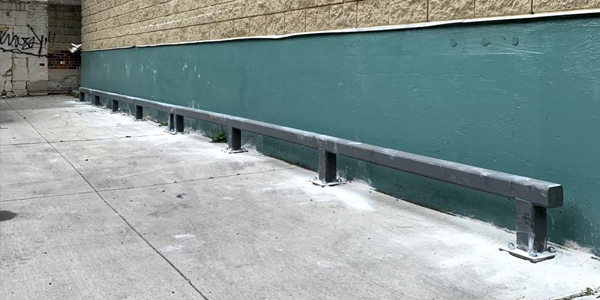
Damage done to structures and equipment like these is often accompanied by immense repair costs, and the damage that could be done to human lives is invaluable. That is why many of our clients opt for cost-effective railing systems that, for all intents and purposes, eliminate the possibility of such accidents; in this case, we were tasked with installing a single-sided guardrail to shield the wall from heavy-duty garbage containers, preventing costly damage.

What Are Guard Rails Made out Of?

Railings produced through custom metal fabrication in Toronto are made from a range of materials, including concrete, steel, and aluminum.

Nonetheless, in most cases, you are liable to see guard rails manufactured from steel. This is due to their ease of fabrication and their ability to withstand a wide range of forces that certain situations may demand.

To better understand this, let’s take the most prevalent railing installation – the highway guard rail. In most, if not all, cases, you’ll see these rails fabricated from galvanized steel and attached to steel uprights with bolts and fasteners. This design allows for the absorption of high-impact collisions while also being economically scalable.

We hope to have imparted some insight into the thought process behind each and every project we undertake in custom metal fabrication in Toronto, no matter how small in scale. To give you an idea of how versatile the team at Weld Rich and Steel are, view our portfolio of works showcasing everything from Bobcat excavator repairs to residential balconies. We service Torontonians from Durham to Halton, so get in touch and contract a team with proven experience!

Project Spotlight: Custom Fire Escape Staircase

The stainless steel fabrication work we do throughout Toronto takes many forms, from blending tank platforms to floating staircases; whether it’s form or function, the team at Weld Rich and Steel always has the specialists on hand to make these projects come to fruition.

Our latest project is the result of collaborative efforts from our entire crew, from designers to engineers, for a residential project focused on safety and visual appeal.

What Did the Project Involve?

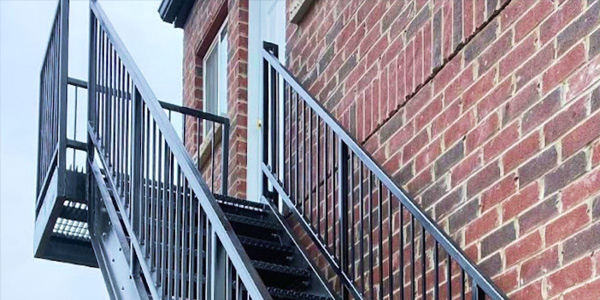
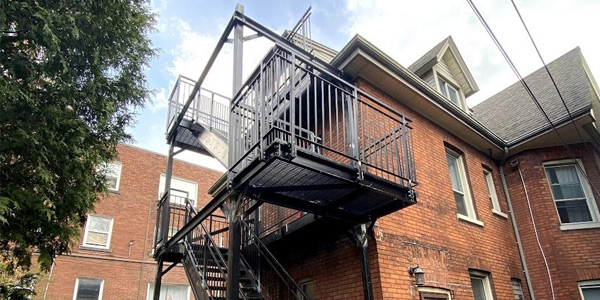
The project we were contracted for involved the fabrication of a stainless steel custom fire escape for a private rental home near High Park, Toronto. As seen from the image below, the finalized project turned out exactly how our client envisioned:

History of the Building and Conforming to Safety Standards

Fabricating this custom fire escape staircase may have been a cause for concern for other contractors due to it being more than 80 years old, but not for the team at Weld Rich and Steel.

When it comes to projects like these, safety is king, and we’re proud to say that throughout our many years of serving the GTA community, our dedication to safety standards hasn’t steered our clients or us wrong.

As shown in the image below, the staircase spans 3 storeys at the rental home. However, the building had originally been erected with 2 storeys, with the client later deciding to extend it to 3.

As a result, it was imperative that this multi-storey fire escape staircase comply with the City of Toronto’s property standards bylaws, including the requirement that fire escapes and their treads, risers, guards, handrails, and supports be kept in safe, clean, and good working order.

On top of this, an array of Ontario building codes has been established for the construction of stairs, with special considerations for fire escapes regarding their exit width, all of which Weld Rich and Steel adheres to with tenacity.

As evidenced above, our tenacity in stainless steel fabrication is unrivalled, no matter the age of your building. Should you be considering installing steel stairs for a residential or commercial project, get in touch! Our craftsmen will be here to provide you with a solution that will stand the test of time.

Request a Quote

File upload — image or sketch