
The landscape of architectural metalwork in Ontario is undergoing a significant transformation. Today, steel staircase design is no longer just about connecting two levels; it’s about making a statement in a home or ensuring peak efficiency in a workspace. In the Greater Toronto Area, demand for high-quality, CWB-certified metalwork in modern custom builds is at an all-time high.
In this guide, we explore how steel is being used differently across two major sectors: the design-heavy residential market and the performance-driven commercial and industrial industries.
Residential Trends – The Aesthetic Statement
In modern home construction, homeowners and architects are moving away from traditional wood and drywall structures. The trend is toward “transparency” and “lightness,” where the staircase becomes a sculpture within the home. Custom residential steel stairs offer the structural integrity to support thin, elegant profiles that other materials simply cannot achieve.
Key Residential Trends
The Mono-Stringer Revolution: The single-beam support is the most requested design in Toronto. It eliminates the visual “bulk” and allows light to pass through the stairs, which is essential in narrow urban homes.
Floating Treads: By concealing the mounting hardware, we create the illusion of steps floating in mid-air. When paired with thick oak or maple, the result is a perfect blend of industrial strength and organic warmth.
Minimalist Glass and Cable: To complement these stairs, residential custom railings are moving toward frameless glass or thin horizontal cables, ensuring that nothing obstructs the view.
Popular Residential Design Options
| Feature | Description | Best For |
|---|---|---|
| Mono-Stringer | A single central beam supporting the treads from below. | Modern, open-concept homes. |
| Floating Treads | Cantilevered steps fixed to a hidden wall stringer. | Minimalist luxury interiors. |
| Spiral Metal Stairs | Compact, vertical rotation around a center post. | Tight spaces and loft access. |
| Glass Railings | Tempered glass panels with stainless steel clips. | Maximizing natural light and views. |
The advantages of a metal staircase in a residential setting go beyond looks; they include zero squeaking, fire resistance, and a lifetime of structural stability that wood simply can’t match.
Elevate Your Space with Modern Metal Design
Ready to transform your property with a staircase that reflects the latest architectural trends? From minimalist mono-stringers to custom glass integrations, our team brings your vision to life with precision and style.
Commercial & Industrial Trends – Built for Performance
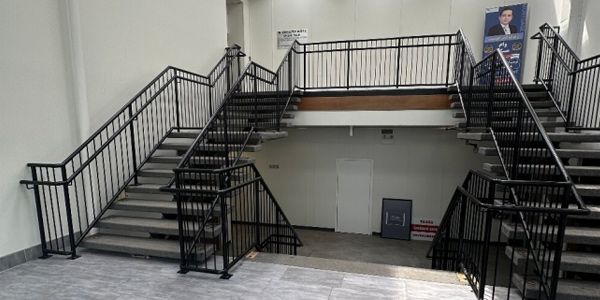
In the business and industrial sectors, the focus shifts from “lightness” to “resilience.” Commercial steel staircase design must account for high-occupancy loads, strict safety codes, and ease of maintenance. However, the rise of the “Industrial Chic” aesthetic means that even functional industrial stairs are now being designed with style in mind.
Key Commercial Trends
Industrial Chic for Retail: Restaurants and boutique offices are opting for raw, clear-coated steel with exposed welds and heavy bolts. This look pays homage to the industrial history of areas like the Distillery District.
Safety-First Integration: In high-traffic environments, safety railings are becoming more sophisticated. Perforated metal panels and wire mesh are replacing standard pickets to provide a higher level of protection against falls and debris.
Outdoor Durability: For exterior fire exits and service stairs, hot-dip galvanizing remains the top trend to combat Ontario’s harsh winters and road salt.
Commercial & Industrial Structural Features
| Feature | Functional Benefit | Typical Application |
|---|---|---|
| Concrete Pan Treads | Superior fire rating and noise dampening. | Hotels and office buildings. |
| Grip Strut Treads | Maximum slip resistance in oily/wet conditions. | Manufacturing and outdoor exits. |
| Mesh Guardrails | High visibility combined with total fall protection. | Schools, stadiums, and warehouses. |
| C-Channel Stringers | Maximum rigidity for wide, high-traffic stairs. | Shopping malls and transit hubs. |
Comparative Analysis: Choosing the Right Path
While the core material-steel-remains the same, the engineering approach differs significantly between a private residence and a commercial facility. Choosing custom metal staircases ensures that the design is optimized for its specific environment, whether that means prioritizing “vibration control” for a home or “load capacity” for a factory.
Residential vs. Commercial Steel Staircase Comparison
| Criteria | Residential Focus | Commercial/Industrial Focus |
|---|---|---|
| Primary Goal | Aesthetics and Space-saving | Safety, Code Compliance, and Durability |
| Stringer Style | Mono-stringer or Hidden | Double C-channel or Plate stringers |
| Tread Material | Wood, Stone, or Decorative Metal | Concrete, Diamond Plate, or Grip Strut |
| Finishes | Powder Coating (Decorative) | Galvanizing or Industrial Primer |
| Code Requirement | OBC Part 9 (Residential) | OBC Part 3 (Commercial/Assembly) |
Why Professional Fabrication and Installation Matter
Designing a staircase is only the first step. The true value lies in the precision of the fabrication and the quality of the install. In Ontario, all structural steel work must adhere to the Ontario Building Code (OBC). A minor error in tread depth or riser height can result in a failed inspection and costly rebuilds.
At Weld Rich & Steel, we bridge the gap between architectural vision and industrial reality. Our shop uses precision jigs to ensure every component is square and true, while our field teams provide expert mobile welding for seamless on-site assembly.
Whether you are looking for a stunning centrepiece for your new home or a rugged set of stairs for your warehouse, our CWB-certified team delivers structures that are built to last a lifetime. By investing in custom steel, you aren’t just buying a staircase – you are investing in the safety and architectural integrity of your property.