
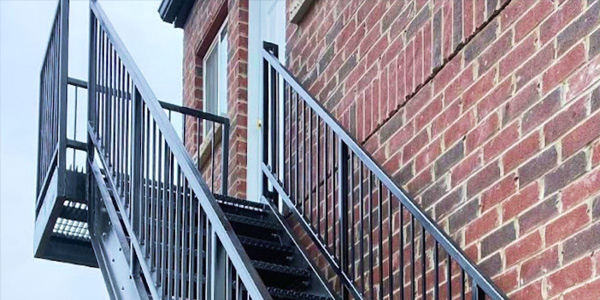
A metal staircase is a significant investment that combines structural necessity with architectural expression. Whether you are adding a mezzanine to a warehouse or a modern feature to a commercial office, the design phase determines the flow, safety, and aesthetic of your space.
At Weld Rich & Steel, we believe that a well-designed staircase should be as durable as it is visually appealing. Here is what you need to consider when designing your custom steel staircase.
1. Choosing the Right Structural Style
The layout of your staircase is often dictated by the available square footage, the intended traffic flow, and compliance with local building standards.
Straight Staircases
The most common and cost-effective option. Straight stairs are easy to install and provide a clean, industrial look. They are ideal for primary access to mezzanines or as functional transitions in retail spaces. For industrial applications, we often use heavy-duty C-channels to ensure maximum rigidity under heavy loads.
Spiral and Helical Stairs
Spiral: Perfect for tight corners where space is at a premium. They rotate around a central post. While compact, they require precision engineering to ensure the tread width meets safety requirements at the walking line.
Helical (Curved): These offer a more luxurious, flowing aesthetic without a central pole. They require high-precision fabrication and serve as a stunning focal point in high-end commercial interiors or modern residential stairs.
Mono-Stringer vs. Double Railing SystemStringer
Mono-Stringer: Uses a single structural beam (usually a large HSS square tube) centered under the treads. It creates an “open,” airy feel—perfect for modern, minimalist metal staircase design. It requires expert welding to eliminate any “bounce” or vibration.
Double Stringer: The traditional approach with beams on both sides of the treads. This provides maximum stability for heavy-duty industrial use and is the preferred choice for high-traffic emergency exits.
Bring Your Vision to Life with Custom Engineering
Ready to elevate your space with a staircase that blends safety and style? Contact our CWB-certified team today for a professional design consultation and a custom quote tailored to your project’s unique requirements.
2. Selecting Tread Materials
The “treads” are the surfaces you interact with most. Your choice should be dictated by the installation environment (indoor vs. outdoor), maintenance requirements, and the desired level of acoustic comfort.
Diamond Plate (Checker Plate): The industrial gold standard. The raised pattern provides high-impact slip resistance and extreme durability. It is the most cost-effective solution for warehouses, service areas, and residential metal fabrication projects where utility is the priority.
Concrete Pan Treads: These are steel “trays” engineered to be filled with concrete on-site. They are the preferred choice for commercial buildings because they offer superior fire ratings and significant noise reduction—eliminating the “clanging” sound often associated with metal stairs.
Grip Strut / Perforated Steel: Essential for outdoor exits in the Greater Toronto Area. The open-hole design allows snow, ice, and debris to fall through the surface. This self-cleaning feature ensures a safe, non-slip surface year-round, even during harsh winter cycles.
Architectural Inlays: To achieve a premium aesthetic in offices or custom homes, steel frames can be designed to support wood, glass, or stone inlays. This provides the structural strength of a metal staircase design while allowing the stairs to blend with high-end interior finishes.
3. Railing and Balustrade Integration
Your home railing system is not just a safety feature—it defines the staircase’s silhouette and ensures compliance with the Ontario Building Code (OBC). The choice of balustrade should balance aesthetic goals with the necessary level of fall protection.
Industrial Pipe Rails: Known for being durable and easy to grip, these are the standard for warehouses and industrial mezzanines. Their rounded profile provides the most ergonomic grip for high-traffic service areas.
Glass Guardrails: When paired with steel stringers, glass panels offer a sleek, transparent look that makes small spaces feel larger. We use tempered safety glass to ensure that the “open” feel doesn’t compromise structural security.
Horizontal Cable or Vertical Picket:
Horizontal Cable: A favorite for modern commercial designs, providing a minimalist, “nautical” feel without blocking light or sightlines.
Vertical Picket: The most secure option for high-occupancy buildings. To meet safety standards, pickets are spaced to ensure that no object larger than 4 inches can pass through, providing peace of mind for both residential and commercial applications.
Regardless of the style you choose, the integration of the railing system must prioritize structural rigidity at every connection point. A high-quality balustrade does more than provide a handhold; it reinforces the entire metal staircase design by acting as a secondary support and a visual frame. At Weld Rich & Steel, we ensure that every railing—from minimalist glass to heavy-duty pipe—is seamlessly welded or bolted to the stringers, providing a rock-solid finish that meets both your aesthetic goals and Ontario’s stringent safety requirements.
Precision Fabrication for Your Next Project
A great design is only as good as its execution. From structural integrity to the final finish, our team ensures your custom staircase is built to last. Partner with Weld Rich & Steel for expert craftsmanship and a seamless installation process.
4. Finish and Protection
The finish is the final layer of defence that protects your investment from wear, tear, and the environment. Choosing the right coating is a balance between aesthetic goals and the staircase’s location.
Powder Coating: The premium choice for indoor stairs. Available in nearly any color, it provides a durable, “furniture-grade” finish that is far more resistant to chips and scratches than traditional paint.
Hot-Dip Galvanizing: Essential for any staircase exposed to Ontario’s elements. This process involves submerging the steel in molten zinc, creating a metallurgical bond that prevents rust for decades, even in high-salt environments.
Professional Priming: For projects that require a specific on-site paint match, we apply an industrial-grade primer in the shop. This ensures the final coat of paint adheres perfectly to the steel, preventing peeling in the future.
5. Why Professional Fabrication Matters
A staircase is a complex structural assembly where even a few millimeters of error can lead to a failed installation or a safety hazard. Precision in the fabrication shop ensures a perfect fit on-site, saving time and preventing structural stress.
At Weld Rich & Steel, our CWB-certified welders treat every staircase as a critical life-safety element. We ensure that every weld, anchor, and joint is structurally sound and fully compliant with the Ontario Building Code (OBC). Professional fabrication doesn’t just mean the stairs look good—it means they are engineered to handle the “live loads” of daily traffic and the rigorous demands of emergency evacuations.