Project Spotlight: Blending Tanks Platform

When it comes to custom metal fabrication in Toronto, Weld Rich and Steel maintains a high standard of excellence and quality in customer service and lasting results. This is true across all industries and clients we serve.

Blending Tanks Platform for Siltech Corporation

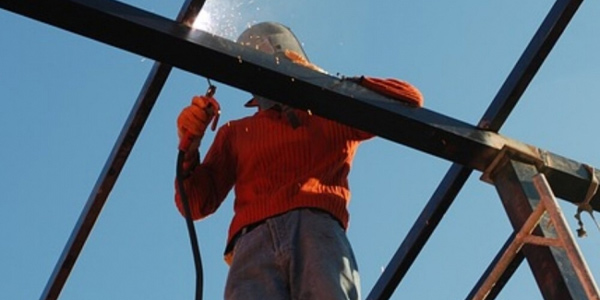
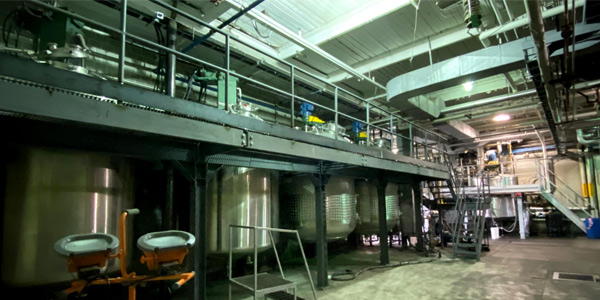
Recently, we finished a project for Siltech Corporation, an industrial company specializing in chemical manufacturing. A mezzanine platform was custom-fabricated by our team of welders to support large tankers carrying industrial-grade chemicals within the plant. The platform serves dual purposes: supporting large tankers and allowing employees to perform maintenance and repairs as needed.

Commercial Industry Custom Metal Fabrication in Toronto

Weld Rich and Steel is experienced in providing custom metal fabrication in Toronto for clients in the commercial sector. With a strong focus on building mezzanine platforms, guard rails, and extensions, we offer the expertise and capabilities to deliver reliable, durable results that stand the test of time. The scope of our work involves meeting the needs of clients across a diverse range of industrial sectors, including food processing and commercial retail spaces. Know that your project is in good hands when you bring it to the team at Weld Rich and Steel.

The Weld Rich and Steel Difference

Weld Rich and Steel offers a myriad of benefits over competitors – including affordable services without compromising on superior quality. Other benefits of opting for our services include flexible payment options, efficient end-to-end processes, and design flexibility, including custom work in structural installation and steel fabrication. Our experienced team of qualified designers, engineers, and technicians is ready and fully capable of assisting you along the way in effectively bringing your project to life.

As industry leaders when it comes to CWB certified welding, you can rest assured knowing your project needs will be met accordingly and to your specifications. Call Weld Rich and Steel today to learn more about our services! We’d be happy to help.
Project Spotlight: Deerfields Clinic

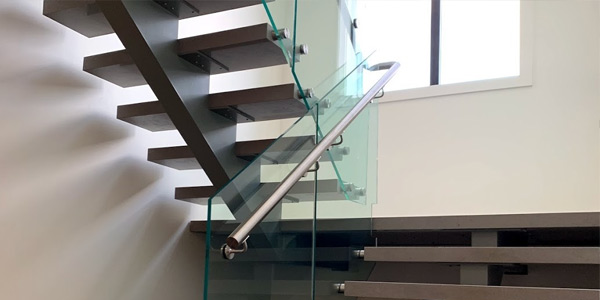
As experts in stainless steel fabrication, we at Weld Rich and Steel have been involved in some of the most intricate custom projects all over the city. Recently, we were called to update an old stairwell in the Deerfields Clinic at The West Mall, replacing it with a sleek, modern floating staircase.

In recent times, floating stairs have become increasingly popular thanks to the visual appeal of the floating illusion. Only the most skilled and talented welders and fabricators can create the best floating stairs. A big part of that process is stainless steel fabrication, in which the staircase components are custom-made and then installed together.

Designed to hide the otherwise bulky and unappealing supporting structures of a staircase, a floating staircase should look as light and unattached as possible. Of course, this design cannot in any way compromise safety and stability.

Due to their minimalist, modern look, floating staircases are most often paired with other materials that visually enhance the sense of modernity, such as glass and steel.

As such, the floating staircase we made for Deerfield Clinic features 3-inch-thick quartz stone slabs for the steps, 15 mm-thick double-laminate tempered glass, stainless steel standoffs on the steps, and a stainless steel handrail.

This particular staircase we designed and fabricated is a mono-beam stringer, featuring support from beneath the steps. The staircase was then custom-painted.

Broadly speaking, the process for creating this mono-beam stringer for our client involved extensive consultation, measurements and design, stainless steel fabrication, installation, and final detailing.

As you can see in the picture above, the largest component to be installed first is the stringer, which essentially sets up the rest of the work we need to do.

A project like this requires different technicians and experts to come together: painters, welders, fabricators, engineers, project managers, and more. Of course, the most important component is the client, whose vision drives the project.

Project Spotlight: The Austin Laneway House

Toronto’s urban development is constantly evolving. As a go-to structural steel fabricator in Toronto, Weld Rich and Steel has been part of some of the most interesting innovations in the city.

Trying to navigate how to accommodate Toronto’s rising population with affordable housing has not been an easy feat. That’s why last year, the city approved rules to construct homes on Toronto’s over 300 kilometers of laneways in the East York District – their primary reasoning being to increase the total number of potential rental apartments and secondary suites in the city.

A laneway apartment suite is a separate residential unit located on the same lot as a detached house, semi-detached home, or townhouse. Laneway housing should be constructed in the backyard of the home, next to a public laneway.

Since the rules were passed, laneway housing has become a new frontier for the city’s urban development.

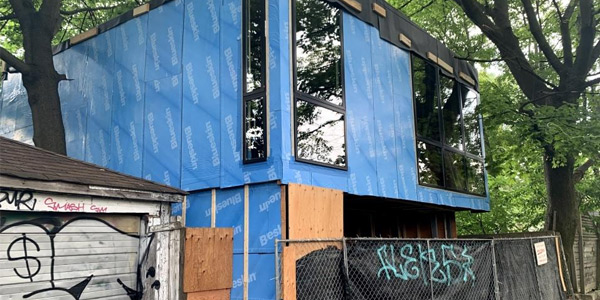
More and more homeowners are submitting applications to construct homes in their laneways. As structural steel fabricators, we recently completed the framing of one of these homes. The homeowner’s purpose for the build was to have an on-site place to care for their mother.

If you’re thinking of building up your home’s underused laneway, there are a few parameters you will have to adhere to. While the structure can be used as a rental suite or as a home for family members, the structure must be self-contained and not sold off as a separate property. Laneway homes are permitted to be up to eight meters wide, and can (in some instances) be larger than the street-facing house on the property.

Laneway housing is truly an innovative way of thinking, utilizing underused backyard spaces while also maximizing and reclaiming space for affordable rentals in the city. If you’re thinking of applying for a laneway house construction permit and require structural steel fabricators, consider Weld Rich and Steel for your next project!

Project Spotlight: Sidewalk Labs’ Smart City Building Raincoat

There’s no denying that Toronto is cold – but that shouldn’t prevent us from enjoying everything our city has to offer, especially in the chilly winter months. The Google sister company, Sidewalk Labs, is taking the urban outdoors to the next level with its Smart City prototypes in Toronto’s Quayside.

Quayside Prototypes by Google-Affiliated Sidewalk Labs

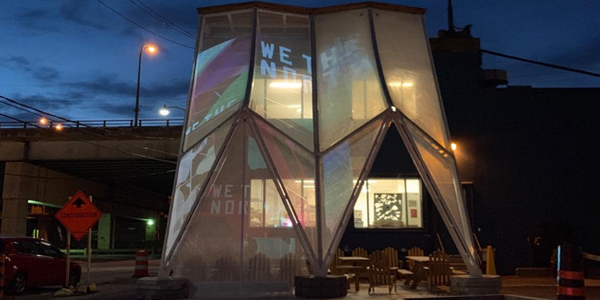
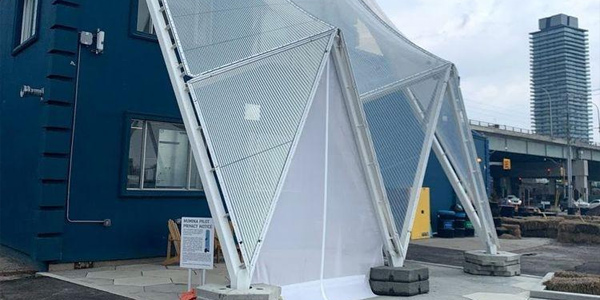
Heated, hexagonal-shaped sidewalks that can light up and large umbrella-like raincoats that shield from precipitation are among the most exciting prototypes Sidewalk Labs has to offer. The building raincoats also adjust by season – effectively allowing a transition from indoors to outdoors based on the weather. Interactive projections are also projected onto the raincoats based on current events in the city.

Steel Raincoat Support Structure

As a leading firm for custom metal fabrication in Toronto, Weld Rich and Steel assisted with the structural steel framing that would support the plastic-like raincoat.

The project took roughly one week to complete, to assemble the steel components. The only caveats are Toronto’s harsh winter weather and the sheer weight of the steel components, totalling roughly 7500 lbs across all three steel parts. Regardless, the final product is stunning. The raincoats offer a level of contemporary style and functionality to the underdeveloped Queen’s Quay area – effectively maximizing the amount of time Toronto-dwellers can spend outdoors, even in the colder months.

Sidewalk Labs is actively working to develop Toronto’s Quayside neighbourhood. With the successful implementation of the hexagonal sidewalks and building raincoats, we hope to see more projects approved for this new and upcoming Toronto neighbourhood.

If you’re looking for custom metal fabrication in Toronto, look no further than Weld Rich and Steel. Our team of professionals is fully capable of bringing your design to life, regardless of the project scope and specifications. For all your custom metal fabrication needs in Toronto, call us today!

CWB Certification and Ontario Welding Standards: A Compliance Guide

In the Ontario construction industry, welding is not just a trade; it is a regulated safety service. For developers, general contractors, and property owners, ensuring that a welding partner is certified by the Canadian Welding Bureau (CWB) is a mandatory requirement for structural integrity and building code compliance.

This guide explains the importance of CWB certification, the CSA standards that govern the industry, and why these regulations are vital for the legal and physical safety of your project.

What is CWB Certification?

The Canadian Welding Bureau (CWB) was formed in 1947 to administer the welding standards integrated into the National Building Code of Canada. Unlike individual welder “tickets,” CWB certification is a company-level credential.

It serves as a third-party verification that a fabricator can consistently produce welds that meet the high-security requirements of Canadian infrastructure.

Why CWB Certification is Critical for Your Project

Choosing a certified welding company provides three essential layers of protection:

  • Legal Compliance: Most municipal inspectors in the Greater Toronto Area will not sign off on structural work (such as beams, mezzanines, or fire escapes) unless it carries the CWB stamp of approval.

  • Liability Protection: In the event of a structural failure, using a non-certified contractor can lead to the denial of insurance claims and significant legal complications.

  • Quality Assurance: CWB certification ensures that the company employs certified Welding Supervisors and follows officially registered Welding Procedure Specifications (WPS).

Key Standards: CSA W47.1 and CSA W59

Our work in Ontario is governed by two primary pillars of the Canadian Standards Association (CSA):

CSA W47.1 (Certification of Companies)

This standard dictates how a company must be organized to perform fusion welding of steel. It requires regular audits by the CWB to verify that equipment, personnel, and management systems meet national safety levels.

CSA W59 (Welded Steel Construction)

This is the technical “manual” for the industry. It covers the design of welded connections, preparation of joints, and strict inspection criteria. Whether we are fabricating a simple lintel or a complex commercial frame, we adhere to CSA W59 to ensure structural longevity.

The Role of the Certified Welder

While the company holds the CWB certification, the individual welders must also prove their competence. Under CWB protocols, welders must undergo practical testing every two years for each welding process and position they use. This ensures that their skills remain sharp and up-to-date with current industry demands.

Frequently Asked Questions (FAQ)

Does every welding project in Toronto require CWB certification?

Any project involving structural elements—where a failure could compromise the building’s stability—must be completed by a CWB-certified company per the Ontario Building Code (OBC).

How do I verify a contractor’s CWB status?

Every certified company should provide a “Letter of Validation.” You can also verify their status directly through the CWB Group’s official directory.

Is CWB certification the same as AWS (American Welding Society)?

While they share similarities, CWB is the specific legal requirement for structural work within Canada. AWS standards are often used globally but do not replace the need for CWB certification on Canadian soil.

Metal Fabrication Quality Control: Ensuring Precision and Durability

In structural steel fabrication, there is no margin for error. A deviation of just a few millimetres or a microscopic flaw in a weld can compromise the integrity of an entire building. Quality Control (QC) is the rigorous process of ensuring that every component leaving the shop meets the exact specifications of the engineering drawings and the safety requirements of the Ontario Building Code.

At Weld Rich & Steel, our QC process integrates traditional inspection methods with modern technologies to deliver precision-engineered solutions.

Phase One: Incoming Material Inspection

Quality starts with the raw material. Before a single cut is made, we verify the integrity of the steel:

  • Mill Test Reports (MTRs): We ensure that all steel beams and plates are accompanied by certification verifying their chemical and physical properties.

  • Surface Inspection: Checking for laminations, heavy rust, or mill scale that could affect weld quality or paint adhesion.

Phase Two: Precision Cutting and Fitting

The accuracy of the final installation depends on the precision of the initial fabrication.

  • CNC & Laser Integration: By using advanced cutting technologies, we ensure that parts are cut to within tight tolerances, reducing the need for field adjustments.

  • Fit-up Inspection: Before final welding, components are “tacked” and measured against the shop drawings to ensure angles, hole placements, and dimensions are 100% accurate.

Phase Three: Weld Quality Assurance

As a CWB-certified company, our welding inspection follows strict CSA W59 protocols:

  • Visual Testing (VT): Our certified supervisors inspect every bead for common defects such as porosity, undercut, or incomplete fusion.

  • Non-Destructive Testing (NDT): For critical structural joints, we employ specialized methods such as:

    • Ultrasonic Testing (UT): Using sound waves to find internal flaws.

    • Magnetic Particle Inspection (MPI): To detect surface and near-surface cracks in ferromagnetic materials.

Phase Four: Coating and Corrosion Protection

Durability is defined by how well the steel resists the environment, especially in Ontario’s harsh winters.

  • Surface Preparation: Cleaning the steel (SSP Standards) to ensure maximum paint or galvanization bonding.

  • Dry Film Thickness (DFT) Testing: Measuring the thickness of the protective coating to ensure it meets the specified micron level for long-term corrosion resistance.

Final Documentation and Delivery

Quality control isn’t finished until the paperwork is done. Each project includes a “Quality Package” that may include:

  • Final as-built measurements.

  • Welding inspection reports.

  • Galvanizing or painting certificates.

Expert Insight: Precision in the shop means faster erection on-site. Learn more about our full Structural Steel Fabrication process.

FAQ: Quality Control in Fabrication

Why is precision in metal fabrication so important?

Precision ensures that structural components fit perfectly during site erection. Poor QC leads to “field fixes,” which are expensive, time-consuming, and can weaken the overall structure.

How often is the fabrication equipment calibrated?

Under our QC program, all measuring tools and welding machines undergo regular calibration to ensure that the output remains consistent with engineering standards.

What is the difference between Quality Control (QC) and Quality Assurance (QA)?

QC is the operational process of checking the product (the “doing”), while QA is the set of planned activities that ensure the QC process is working correctly (the “system”).

Structural Steel Erection: A Comprehensive Guide to Site Success

The erection phase is where the precision of the fabrication shop meets the reality of the construction site. Whether it is a small residential renovation or a complex commercial frame, the success of a steel project depends on meticulous planning, rigorous safety protocols, and on-site expertise.

This guide outlines the critical steps and best practices for a seamless structural steel installation, based on our years of experience in the Greater Toronto Area.

1. Pre-Erection Site Planning

Before the first beam leaves our shop, a comprehensive site survey is essential. Even a minor discrepancy in the foundation can lead to significant delays.

  • Anchor Bolt Verification: We verify the placement and elevation of all anchor bolts. Identifying a misalignment at this stage allows for pre-planned adjustments rather than costly “field fixes.”

  • Access & Logistics: In urban environments like Toronto, space is a luxury. We coordinate “just-in-time” deliveries to ensure that steel members are lifted directly from the truck to the structure, minimizing site congestion.

2. Safety Protocols and Rigging

Steel erection is inherently high-risk work. Our protocols under CSA W47.1 and W59 standards prioritize the safety of the crew and the public.

  • Rigging Inspections: All slings, shackles, and cranes undergo daily inspections.

  • Fall Protection: Every team member follows a strict fall-arrest plan tailored to the project’s unique geometry.

  • Stability During Erection: We ensure the structure is adequately braced at every stage of the assembly to withstand wind loads and self-weight before the final connections are made.

3. The Choice of Connection: Welding vs. Bolting

A successful erection strategy often involves a hybrid of joining methods.

  • Field Bolting: Used for the rapid assembly of the primary frame. We utilize calibrated torque wrenches to ensure every bolt meets the specified tension.

  • Field Welding: When maximum rigidity or architectural aesthetics are required, our CWB-certified mobile units perform high-quality field welds, even in challenging on-site conditions.

4. Coordination with Other Trades

Structural steel is the “skeleton” of the building. Its accuracy affects every trade that follows—from masons to glass installers.

  • Tolerance Management: We work within the tight tolerances defined by CSA S16, ensuring that the frame is perfectly plumb and level.

  • Real-time Problem Solving: Our erection teams are equipped to handle architectural adjustments on the fly, keeping the project timeline on track.

5. Summary Checklist for a Successful Project

To ensure your next steel project is a success, keep this checklist in mind:

  1. Survey Early: Never assume the foundation is perfect.

  2. Plan the Lift: Coordinate crane placement and delivery schedules in advance.

  3. Prioritize CWB Certification: Ensure your erection team is as qualified as your fabricator.

  4. Inspect Constantly: Document every connection, whether it’s a torque-tested bolt or a visual weld inspection.

FAQ: Structural Steel Erection

How long does the erection phase typically take? It depends on the complexity and tonnage. A simple mezzanine can be erected in a day, while a multi-story commercial frame may take weeks of coordinated lifting.

Can steel be erected in the winter? Yes. In Ontario, we erect steel year-round. However, field welding in the winter requires specific pre-heating protocols to prevent the steel from becoming brittle.

What is the role of a site supervisor during erection? The supervisor ensures that the erection sequence follows the engineered drawings and that all safety and quality protocols are strictly maintained.

Structural Steel Finishes: Protection and Aesthetics in Fabrication

In structural welding, the job isn’t finished when the last bead is laid. The “finish” of a weld and the surrounding steel determine two critical factors: how long the structure will last (corrosion resistance) and how it will look (architectural aesthetics).

At Weld Rich & Steel, we apply specific finishing standards to ensure that every project—from industrial beams to custom staircases—stands up to Ontario’s environment.

1. Why Finishing Matters

Without proper finishing, even the strongest weld is vulnerable. In the Greater Toronto Area, road salt, high humidity, and extreme temperature swings can cause rapid oxidation (rust). Proper finishing:

  • Prevents structural weakening due to corrosion.
  • Prepares the surface for long-lasting paint or powder coating.
  • Removes sharp edges and spatter for safety and aesthetics.

2. Common Welding Finishes and Treatments

Depending on the project requirements, we utilize several levels of finishing:

Cleaning and Slag Removal

Every weld pass, especially in SMAW or FCAW, leaves behind slag.

  • The Process: We use chipping hammers and wire wheels to clean the weld to its base metal. This is not just for looks—it is required for a proper visual inspection of the weld’s integrity.

Grinding and Sanding (Architectural Finish)

For “AESS” (Architecturally Exposed Structural Steel), such as indoor mezzanines or handrails, the weld needs to be invisible or smooth.

  • The Process: We grind the weld flush with the base metal and sand it to a specific grit. This creates a seamless look once the metal is painted.

Spatter Removal

Welding often creates “spatter” (small beads of molten metal).

  • The Process: We use anti-spatter sprays during welding and mechanical scrapers afterward to ensure a clean surface. Spatter must be removed because it can pop off later, taking the paint with it and leaving a hole for rust to start.

3. Protective Coatings

The final step in finishing is the protective barrier. The three most common choices in Ontario are:

  1. Shop Primer: A temporary coating that protects the steel during transport and erection. Ideal for steel that will be enclosed inside a building.
  2. Hot-Dip Galvanizing: The gold standard for outdoor structures. The steel is dipped in molten zinc, creating a metallurgical bond that can last 50+ years.
  3. Powder Coating: Offers a durable, high-quality colored finish. Best for architectural elements where branding or design is key.

4. Maintenance and Longevity

A good finish reduces maintenance costs. We recommend regular visual inspections of outdoor steelwork to catch “nicks” in the coating before rust can spread beneath the surface.

FAQ: Welding Finishes

Do all welds need to be ground flush?

No. In most industrial structural applications, grinding a weld flush can actually weaken it if not done correctly. We only grind welds flush when specifically requested for architectural reasons (AESS).

What is the best finish for outdoor steel in Toronto?

Hot-dip galvanizing is the most effective defence against Ontario’s winter salt and moisture.

Can you paint over a fresh weld immediately?

No. The weld must be cooled, cleaned of all slag/flux, and often degreased. Painting over a dirty weld will lead to the paint peeling within months.

Structural Welding Technical Guide: Processes, Standards, and Best Practices

Structural welding is the backbone of modern infrastructure. It is the specialized process of joining steel components to create load-bearing frames for buildings, bridges, and industrial platforms. In Ontario, the integrity of these structures is not just a matter of engineering—it is a matter of public safety, strictly regulated by national codes and provincial standards.

This guide provides a comprehensive technical overview of structural welding processes, quality control, and the compliance requirements necessary for construction projects in 2026.

What Defines Structural Welding?

Unlike general or ornamental welding, structural welding involves components that support the weight of a building or a heavy machine. Every weld must be capable of withstanding calculated stresses, including tension, compression, and environmental loads (such as wind or snow in the Toronto area).

Key Industry Standards:

  • CSA W47.1: The primary standard in Canada for the certification of companies involved in fusion welding of steel.
  • CSA W59: The code that governs welded steel construction (design and techniques).

Essential Structural Welding Processes

Different projects require different welding techniques. Below are the most common processes used in high-integrity steel fabrication.

FCAW (Flux-Cored Arc Welding)

FCAW is often considered the “gold standard” for structural steel fabrication. It uses a continuously fed consumable electrode containing a flux.

  • Best for: Heavy structural frames and high-deposition welding.
  • Advantage: High productivity and excellent deep penetration, making it ideal for thick steel beams.

SMAW (Shielded Metal Arc Welding)

Commonly known as “stick welding,” this is a manual process using a consumable electrode coated in flux.

  • Best for: Outdoor construction sites, mobile welding, and maintenance.
  • Advantage: Portable and less sensitive to wind, which is crucial for on-site welding in Ontario’s varying weather conditions.

GMAW (Gas Metal Arc Welding / MIG)

This process uses a solid wire electrode and an external shielding gas.

  • Best for: Controlled shop environments and thinner structural components.
  • Advantage: Clean welds with minimal slag, allowing for faster post-weld cleanup.

The Structural Fabrication Process: From Design to Installation

A successful weld begins long before the arc is struck. At Weld Rich & Steel, we follow a rigorous four-stage process:

  1. Technical Design & CAD: Using advanced software to ensure every joint is designed to meet load-bearing requirements.
  2. Material Preparation: Steel beams (W-beams, I-beams, or Channels) are cut and bevelled to ensure maximum weld penetration.
  3. Fit-up and Tacking: Components are precisely aligned according to the blueprint before the final welding begins.
  4. Final Welding & Cooling: Welds are executed in a specific sequence to minimize thermal distortion and internal stress.

Expert Note: Looking for on-site services? Explore our Mobile Welding Toronto services for specialized structural repairs.

Quality Control and Safety Protocols

Safety in structural welding is non-negotiable. Defective welds can lead to catastrophic structural failures.

  • Visual Inspection: Every weld is checked for surface defects like porosity, undercut, or cracks.
  • NDT (Non-Destructive Testing): For critical joints, we utilize ultrasonic or radiographic testing to ensure internal integrity.
  • Weld Finishes: Proper finishing, such as grinding or powder coating, prevents corrosion and ensures the longevity of the structure.

Frequently Asked Questions (FAQ)

What is the difference between structural welding and general welding?

Structural welding specifically deals with load-bearing elements where failure risks the entire building’s stability. It requires higher-level certifications (CWB) and adherence to stricter codes than general metalwork.

Why is CWB certification mandatory in Ontario?

The Canadian Welding Bureau (CWB) ensures that companies have the proper equipment, tested procedures, and qualified supervisors to perform safe, reliable welding according to CSA standards.

Which is better: Welded or Bolted connections?

Welded connections offer superior rigidity and aesthetic “seamlessness,” while bolted connections are often faster for on-site assembly. Often, a hybrid approach is used for optimal efficiency.

Request a Quote

File upload — image or sketch