Modern Railing Design: Elevating Safety and Style in Toronto Homes

A railing is much more than a safety barrier; it is the visual finish that defines the character of your staircase. In Toronto’s high-end residential and commercial market, the demand for minimalist, durable, and code-compliant railing systems has never been higher.

At Weld Rich & Steel, we combine architectural vision with CWB-certified structural integrity. Whether you are looking for the transparency of glass or the bold lines of laser-cut steel, here is your guide to the top railing design ideas.

1. Glass Railings: The Illusion of Space

Glass remains the gold standard for modern, open-concept homes. By removing visual barriers, glass railings make even small entryways feel expansive.

  • Talon/Standoff Systems: Small stainless steel pins hold the glass panels in place, creating a sleek, hardware-minimal look.

  • Base Shoe Systems: The glass is secured in a hidden metal track at the floor level, providing a completely seamless “all-glass” appearance.

  • Safety First: We use only tempered or laminated safety glass that meets Ontario Building Code (OBC) requirements, ensuring it can withstand significant impact.

2. Minimalist Horizontal Bar Railings

For a modern industrial or “Scandi” look, horizontal steel bars are a top choice.

  • The Design: Slim, round or square steel bars run parallel to the stairs.

  • Durability: Usually finished in a matte black powder coat, these railings are incredibly resistant to fingerprints and wear.

  • Note on Code: In many residential settings in Ontario, horizontal railings must be designed to be “non-climbable” if young children are present. We help you navigate these specific safety regulations during the design phase.

3. Laser-Cut Perforated Panels

If you want a truly custom, artistic statement, laser-cut steel panels offer infinite possibilities.

  • Privacy and Light: Perforated metal provides a sense of privacy for a staircase while still allowing light to filter through.

  • Custom Patterns: From geometric honeycomb designs to organic, leaf-like patterns, we can cut almost any vision into the steel.

4. The “Cable” Look: Stainless Steel Wire

Cable railings offer a nautical yet modern aesthetic that is perfect for both interior lofts and exterior decks.

  • Maintenance-Free: High-quality stainless steel cables won’t rust or stretch over time.

  • Visibility: Like glass, cable railings offer great visibility but with a more “textured” and industrial feel.

5. Integrated Lighting: Safety Meets Atmosphere

In 2026, the trend is to hide the light source.

  • Under-Rail LED Strips: We can fabricate handrails with a recessed channel for LED lighting. This illuminates the path perfectly without the glare of overhead lights, creating a high-end “hotel” vibe in your home.

Engineering Safety into Aesthetics

A beautiful railing is useless if it isn’t stable. Under the CSA and OBC standards, a railing must be able to withstand specific “point loads” (pressure).

  • Structural Connection: At Weld Rich & Steel, we don’t just screw railings into the floor; we ensure they are structurally tied into the staircase frame or the building’s subfloor for maximum stability.

  • Glass Stability: We debunk the myth that glass is “fragile.” When integrated correctly with steel supports, a glass railing is one of the most stable and long-lasting options available.

Finding Your Perfect Match

The right railing depends on your home’s architecture, your budget, and your lifestyle. Whether you need the ruggedness of steel for a commercial unit or the elegance of glass for a luxury penthouse, our fabrication team is here to bring that vision to life with precision and safety.
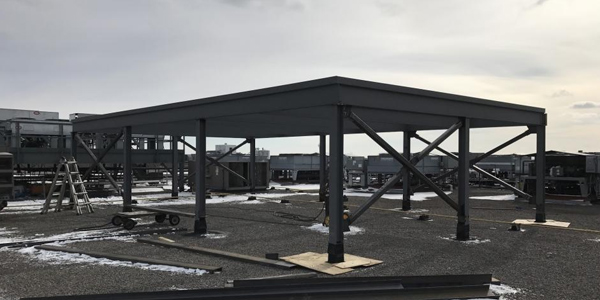
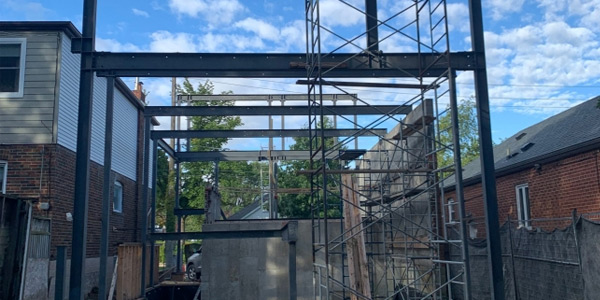
Exploring the Different Types of Structural Steel: A Guide to Beams, Channels, and Angles

In the world of construction, “steel” is a broad term. Choosing the right type of structural steel is the difference between a project that is over-budget and one that is perfectly engineered for safety and efficiency.

At Weld Rich & Steel, we use a variety of shapes and grades approved by the Canadian Institute of Steel Construction (CISC). Whether you are reinforcing a basement in Mississauga or erecting a commercial frame in Vaughan, here is everything you need to know about structural steel types.

1. W-Beams and I-Beams: The Backbone of Construction

Beams are designed to resist bending under heavy loads. While they look similar, their application differs significantly.

  • W-Beams (Wide Flange): These have straight, wide flanges and are the most common beams used in modern Toronto construction. They are incredibly efficient at supporting vertical loads over long spans.

  • I-Beams (S-Beams): These have tapered flanges. They are the “classic” beam, often found in older Toronto buildings or used in specialized machinery tracks.

  • Application: Removing load-bearing walls, creating open-concept kitchens, and primary floor supports.

2. Channels (C-Beams)

Channels have a flat back and two flanges on one side, forming a “C” shape.

  • When to use them: They are not as strong as I-beams for long spans, but they are perfect for framing openings, creating stair stringers, and as sub-frames for large equipment.

  • The Benefit: Their flat back allows them to be bolted flush against other flat surfaces, making them ideal for reinforcing existing wood joists (sistering).

3. Hollow Structural Sections (HSS)

HSS comes in square, rectangular, or round tubes.

  • Strength in all directions: Unlike a beam, which is strongest when loaded from the top, HSS handles twisting (torsion) and side-loads exceptionally well.

  • Aesthetics: Because they are “closed” shapes, they look much cleaner. We often use HSS for custom exposed staircases, handrail posts, and modern architectural columns.

4. Angles (L-Shapes)

Angles are the most versatile components in a fabricator’s shop.

  • Lintels: In Toronto’s brick homes, steel angles are used as “lintels” to support the brickwork over new windows or doors.

  • Bracing: They are often used to connect larger beams together or to provide lateral stability to a frame.

5. How We Choose the Right Steel for You

Selecting the material isn’t just about the shape; it’s about the Grade and Environment.

  1. Load Requirements: Our engineers calculate the “tributary load” to decide if you need a lightweight 8-inch beam or a heavy-duty 14-inch section.

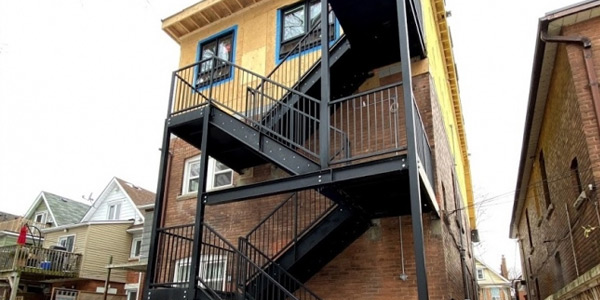
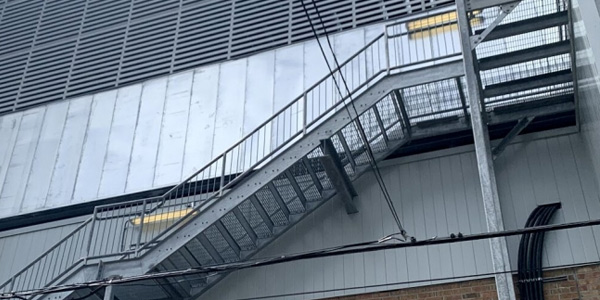
  2. Atmospheric Exposure: For a basement, standard carbon steel with primer is enough. For a rooftop patio or a fire escape, we specify Galvanized Steel or Stainless Steel to prevent rust.

  3. CWB Standards: Regardless of the shape, every piece of steel we install is welded according to CSA W47.1 standards, ensuring the joints are as strong as the steel itself.

Summary: Quick Selection Guide

ComponentBest ForVisual Profile
W-BeamLong spans, open conceptsLarge, Wide “H”
ChannelStairs, wall framing, lintelsFlat-backed “C”
HSS (Tube)Columns, architectural featuresClean Square/Round
AngleBrick support, bracingSimple “L”

Precision Materials for Lasting Structures

Using the wrong type of steel can lead to structural sagging or unnecessary costs. At Weld Rich & Steel, we bring our deep knowledge of material science to every project in the GTA, ensuring your structure is built with the right “bones.”

Load-Bearing vs. Framed Structures: Which is Right for Your Project?

When starting a construction project in the GTA—whether it’s a custom modern home or a commercial warehouse—the first major decision is the structural system. Understanding the difference between a Load-Bearing Structure and a Framed Structure is critical for determining your project’s cost, speed, and future flexibility.

At Weld Rich & Steel, we work with both systems, providing the structural steel components that make these buildings possible. Here is a breakdown of how they work and which one suits your needs.

1. Load-Bearing Structures: The Traditional Approach

In a load-bearing system, the walls themselves support the weight of the entire building (roof, floors, and occupants) and transfer it down to the foundation.

  • How it works: Think of a traditional brick house. Every exterior wall (and some interior ones) is essential. If you remove a wall, the floor above may collapse.

  • Materials: Typically masonry (brick/block), stone, or heavy timber.

  • The Role of Steel: Even in load-bearing buildings, steel is essential. We fabricate lintels and header beams that allow for windows and doors to be cut into these thick walls without compromising the structure.

Pros:

  • Cost-effective for small, simple residential buildings.

  • Excellent fire resistance and sound insulation due to thick walls.

Cons:

  • Zero Flexibility: You cannot easily move walls for an “open-concept” renovation.

  • Height Limits: As the building gets taller, the bottom walls must become incredibly thick, wasting valuable floor space.

2. Framed Structures: The Modern Standard

A framed structure works like a human skeleton. A “cage” of vertical columns and horizontal beams supports all the weight. The walls are merely “curtains” that keep the weather out but carry no load.

  • How it works: Heavy-duty steel columns and beams are bolted or welded together. This skeleton carries the entire load of the building.

  • Materials: Structural steel is the premier choice for framing due to its strength-to-weight ratio.

Pros:

  • Complete Flexibility: Since the walls aren’t holding anything up, you can place them anywhere—or have no walls at all (glass facades).

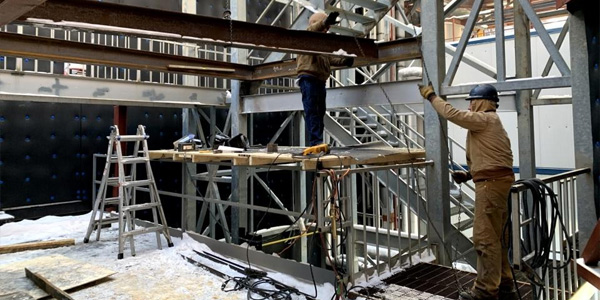
  • Speed: Steel frames are fabricated in our shop and “erected” on-site in days, not weeks.

  • Space Efficiency: Thinner walls mean more square footage for living or working.

Cons:

  • Higher initial material cost compared to basic masonry.

  • Requires specialized CWB-certified welding and professional engineering.

3. The Comparison: Side-by-Side

FeatureLoad-Bearing StructureFramed Structure (Steel)
Load TransferThrough walls to foundationThrough beams/columns to foundation
Design FreedomLimited (Small rooms)Infinite (Open concept)
Construction SpeedSlower (Brick by brick)Fast (Pre-fabricated steel)
Renovation PotentialDifficult/ExpensiveEasy (Walls can be moved)
Best ForLow-rise residentialHigh-rise, lofts, modern homes

4. Converting Load-Bearing to Framed: The Toronto Trend

Many of our projects in downtown Toronto involve converting old load-bearing masonry homes into modern framed spaces.

  • The Steel Intervention: We install massive structural steel beams (I-beams) to replace old load-bearing walls.

  • The Result: We effectively turn a rigid, “closed-off” Victorian house into a modern framed structure, allowing for the wide-open kitchens and living areas that drive up property values.

Choosing Your Foundation

If you are building a simple shed or a small traditional cottage, load-bearing walls might suffice. But if you want a building that is future-proof, open, and fast to build, a structural steel-framed system is the undisputed winner.

Steel Staircase Installation: A Comprehensive Guide to Cost, Styles, and Process

When planning a renovation or a new build in the GTA, the staircase is often one of the largest structural investments. Understanding the costs and the installation process is vital for a smooth project. At Weld Rich & Steel, we believe that transparency regarding pricing and technical requirements helps our clients make the best decisions for their property.

1. What Does a Custom Steel Staircase Cost in Toronto?

On average, a custom residential steel staircase in Ontario ranges from $8,000 to $25,000+. This investment is broken down into three main categories:

  • Design & Engineering: Complex designs (like mono-stringers) require detailed CAD modeling and structural sign-off to ensure they meet the Ontario Building Code (OBC).

  • Fabrication (Shop Labor): This includes CWB-certified welding, material costs (steel gauge), and the type of finish (e.g., powder coating vs. shop primer).

  • On-Site Installation: The logistics of bringing heavy steel into an existing building. If we need specialized lifting equipment or if the site has difficult access, labor costs will reflect that.

2. Choosing the Right Style for Your Budget

The “style” is more than just a look—it’s a structural choice that dictates the complexity of the installation.

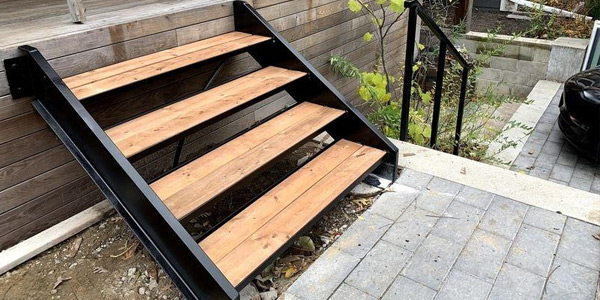
  • Standard Double-Stringer: Two steel beams on either side of the treads. This is the most cost-effective and rugged option, common in industrial and modern-industrial homes.

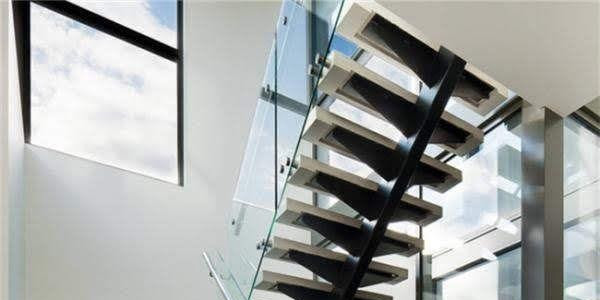
  • Mono-Stringer (Floating): A single central beam. This requires a much heavier steel section and more precise welding to prevent “bouncing,” making it a mid-to-high-range investment.

  • Cantilevered Stairs: Treads that appear to grow out of the wall. This is the most complex installation, requiring a heavy steel frame hidden inside the wall structure.

3. The Pros and Cons of Choosing Steel

The Pros:

  • Structural Permanence: Steel does not “settle” or dry out like lumber, meaning your stairs will never squeak or develop gaps.

  • Space Saving: Because steel is so strong, the supporting structure (stringer) can be much thinner than wood, freeing up space for storage or walkways underneath.

  • Speed of Install: Most of the work happens in our shop. On-site installation typically takes only 1–2 days, compared to weeks for a custom-built wood staircase.

The Cons:

  • Upfront Cost: Steel is more expensive initially than basic builder-grade wood stairs.

  • Acoustics: Without proper tread selection (like wood overlays or rubber dampeners), metal can be louder than wood.

  • Weight: Steel is heavy. In older Toronto homes, we may need to reinforce the floor or walls to support the new structure.

4. The Installation Process: From Shop to Site

At Weld Rich & Steel, we follow a strict protocol to ensure safety and precision:

  1. Laser Measurement: We measure your site with high-precision tools to ensure the staircase fits to the millimeter.

  2. CWB-Certified Fabrication: All welding is performed in a controlled environment to ensure structural integrity.

  3. The Delivery: We coordinate the logistics of moving the steel into your space, whether it’s a tight downtown townhouse or a wide-open commercial unit.

  4. The Final Weld & Bolt: Our mobile welding team secures the structure to the building’s frame, ensuring it meets or exceeds all local safety codes.

A Long-Term Investment

A steel staircase is a “lifetime” feature. While the initial cost and installation require careful planning, the lack of maintenance and the sheer durability of the structure provide the best return on investment for any property in the GTA.

The Precision Advantage: The Role of CAD Software in Modern Metal Fabrication

In the era of traditional metalwork, “measure twice, cut once” was the gold standard. Today, at Weld Rich & Steel, we’ve taken it a step further: Model in 3D, simulate, and then fabricate with absolute precision. The integration of advanced CAD (Computer-Aided Design) software into our fabrication process has revolutionized how structural steel and custom metalwork are delivered in the Greater Toronto Area. Here is why CAD is the backbone of every successful project we undertake.

1. Eliminating On-Site Errors (The “Perfect Fit”)

Nothing kills a project’s budget faster than a steel beam or a staircase that arrives on-site and doesn’t fit.

  • 3D Modelling: CAD allows us to create a digital twin of your structure. We can see how a custom staircase will interact with existing HVAC ducts, plumbing, and floor joists before a single spark is struck in our shop.

  • Clash Detection: The software identifies “clashes” – points where the steel might interfere with other building components. Resolving these digitally saves thousands of dollars in emergency on-site modifications.

2. Advanced Load Simulation and Engineering

Before we weld, we know exactly how the metal will behave.

  • Structural Integrity: Using FEA (Finite Element Analysis) within CAD, we can simulate the “live loads” on a residential beam or an industrial mezzanine.

  • Optimized Design: CAD helps us determine the most efficient weight and shape of a beam. This ensures the structure is 100% safe without being over-engineered (which saves the client money on unnecessary material).

3. Precision Cutting and CNC Integration

The digital models we create are fed directly into our fabrication equipment.

  • Laser and Plasma Accuracy: Our CAD designs guide CNC (Computer Numerical Control) machines to cut steel plates and beams with tolerances as small as a fraction of a millimetre.

  • Complex Geometry: Designs that were once impossible – like spiral staircases with tapering treads or intricate perforated panels—are now easily fabricated thanks to CAD-to-machine workflows.

4. Enhanced Communication with Clients and Architects

A blueprint can be hard to read for a homeowner. A 3D model changes everything.

  • Visual Approvals: We provide our clients with 3D renderings of their custom projects. This ensures that the final product matches the aesthetic vision exactly.

  • Seamless Collaboration: We can import architectural files (BIM) directly into our software, ensuring that the structural steel fabrication is perfectly synchronized with the overall building design.

5. Better Cost Estimation and Material Efficiency

CAD allows for “Nesting”—the process of arranging parts on a sheet of metal to minimize waste.

  • Accurate Quotes: Because we know exactly how much steel and welding wire a project requires, our quotes are precise and transparent.

  • Sustainability: Reducing scrap metal through digital optimization is a key part of our commitment to sustainable construction in Ontario.

Conclusion: Technology Meets Craftsmanship

At Weld Rich & Steel, CAD software doesn’t replace our master welders—it empowers them. By combining cutting-edge digital design with CWB-certified craftsmanship, we ensure that every project we deliver is a masterpiece of precision and safety.

Steel Beams in Residential Construction: Why They are the Superior Choice for Your Home

In the traditional residential construction of the Greater Toronto Area, wood has long been the standard. However, as modern architectural tastes shift toward open-concept layouts and large glass walls, the limitations of timber are becoming clear.

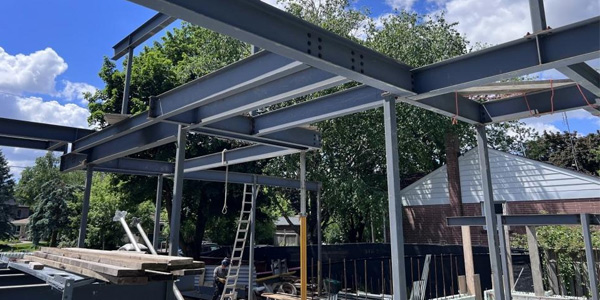
Structural steel beams are no longer reserved for skyscrapers. Today, they are the secret weapon for homeowners looking to create durable, spacious, and high-value properties. Here is why steel is the ultimate long-term solution for residential projects.

1. Unmatched Strength for Open-Concept Living

The biggest trend in Toronto home renovations is removing load-bearing walls to create a seamless flow between the kitchen and living area.

  • The Limitation of Wood: To span a 20-foot opening with wood (LVL), you often need a beam so deep that it drops significantly below the ceiling line, creating an unsightly bulkhead.

  • The Steel Advantage: A steel I-beam can support the same load with a much lower profile. This allows for flush-mount installations, where the beam is tucked hidden into the floor joists, resulting in perfectly flat, high ceilings.

2. A Cost-Effective Solution for Long-Term Projects

Many homeowners hesitate at the initial price of steel compared to lumber. However, when looking at the “total cost of ownership,” steel is often the more economical choice:

  • Zero Maintenance: Steel does not warp, twist, or shrink over time. In wood-framed houses, lumber “settles” and dries out, often leading to cracked drywall and sticking doors. With steel, your structure remains perfectly level forever.

  • Pest and Fire Resistance: Steel is non-combustible and impervious to termites or carpenter ants—issues that can cost tens of thousands of dollars to repair in traditional wood homes.

  • Increased Property Value: A home built with a steel “skeleton” is perceived as a premium, high-end build, significantly increasing resale value in the competitive GTA market.

3. Speed and Precision of Installation

Time is money on a construction site.

  • Shop Fabrication: At Weld Rich & Steel, we fabricate your beams to the exact millimetre based on your architectural drawings. This means when the steel arrives on-site, it drops into place perfectly.

  • Reduced Labor: Unlike building up a multi-ply wood beam on-site, which takes hours of nailing and gluing, a single steel beam can be set in minutes with a small lift or crane.

4. Design Flexibility: Wide Spans and Cantilevers

If your dream home includes floor-to-ceiling windows or a balcony that seems to “hover” without support, steel is the only material that can make it happen.

  • Longer Spans: Steel allows for massive openings for bi-fold glass doors, connecting your indoor space to your backyard without the need for thick, vision-blocking posts.

  • Structural Integrity: Steel’s high strength-to-weight ratio makes it ideal for challenging sites in Ontario, such as building on slopes or reinforcing older masonry structures.

5. Environmental Sustainability

Choosing steel is also a “green” decision.

  • Recycled Content: Most structural steel used in Ontario contains at least 90% recycled material.

  • 100% Recyclable: At the end of the building’s life, the steel can be melted down and used again, unlike pressure-treated wood, which often ends up in hazardous waste landfills.

FeatureStructural SteelTraditional Wood (Lumber/LVL)
Span CapabilityExceptional (Up to 30+ feet)Limited (Requires more posts)
DurabilityLifetime (No rot/warping)Subject to moisture and settling
Fire RatingNon-combustibleHighly combustible
Ceiling HeightMaximized (Low profile)Reduced (Deep bulkheads)

Build it Right the First Time

Whether you are building a custom home from the ground up or removing a wall in a 100-year-old Victorian in Cabbagetown, structural steel provides the peace of mind that your home is stable. At Weld Rich & Steel, we specialize in the residential application of structural steel, providing CWB-certified welding and precision fabrication for projects of all sizes.

Metal vs. Wood: The Ultimate Advantages of a Metal Staircase

When designing a new home or renovating a commercial space in Toronto, the staircase is often the most significant structural and aesthetic investment. While wood has been the traditional choice for decades, custom metal staircases have taken the lead in modern architecture.

At Weld Rich & Steel, we’ve seen a 40% increase in residential metal stair conversions over the last two years. Here is a deep dive into why metal is the superior material for your next project.

1. Structural Strength and Slim Profiles

The primary advantage of metal (specifically structural steel) is its high strength-to-weight ratio.

  • The “Floating” Look: To achieve a “floating” or mono-stringer design with wood, the supporting beams would have to be massive and bulky. Steel allows for a single, slim spine that supports the entire structure.

  • Long Spans: Metal can span much larger distances without the need for unsightly support posts, giving you more usable floor space underneath the stairs.

2. Extreme Durability: No Squeaks, No Warps

One of the most common complaints about wood stairs in the Ontario climate is the “seasonal shift.”

  • Humidity Resistance: Wood expands and contracts with Toronto’s humid summers and dry winters, leading to loose joints and that annoying “squeaking” sound. Steel is dimensionally stable; it stays exactly the same size year-round.

  • Longevity: A steel staircase is a “lifetime” product. It won’t rot, it won’t be damaged by pests (termites), and it can withstand heavy foot traffic in commercial settings without showing wear.

3. Unmatched Design Versatility

Metal is a highly “plastic” medium in the hands of a skilled fabricator.

  • Custom Shapes: From tight spirals to sweeping curved grand staircases, metal can be bent and welded into shapes that are nearly impossible or prohibitively expensive to create with wood.

  • Modern Aesthetics: Steel pairs perfectly with other high-end materials like glass, cable railings, and stone. Whether you want a raw industrial look or a polished contemporary finish, metal provides the perfect canvas.

4. Fire Safety and Building Code Compliance

In commercial and multi-unit residential buildings in Ontario, fire safety is non-negotiable.

  • Non-Combustible: Unlike wood, steel does not contribute fuel to a fire. It is the safest material for emergency egress and fire escapes.

  • OBC Compliance: Metal fabrication allows for precise control over rise, run, and handrail continuity, ensuring your project passes building inspections the first time.

5. Cost-Effectiveness Over Time

While the initial investment in a custom metal staircase may be higher than a basic builder-grade wood stair, the Total Cost of Ownership is lower:

  1. Zero Maintenance: No need for sanding, staining, or refinishing every 5 years.

  2. Faster Installation: Our staircases are pre-fabricated in the shop and often installed in just one day, saving you weeks of on-site carpenter labor.

  3. Resale Value: A custom steel staircase is a “wow” factor that significantly boosts a property’s market value.

Metal vs. Wood: Quick Comparison

FeatureCustom Metal StaircaseTraditional Wood Staircase
AestheticModern / Industrial / MinimalistTraditional / Rustic
Durability50+ Years (No squeaks)15–25 Years (May warp/squeak)
MaintenanceMinimal (Dusting/Wiping)High (Sanding/Staining)
Fire SafetyExcellent (Non-combustible)Poor (Combustible)
Eco-Friendly100% RecyclableLimited (Often chemically treated)

Investing in Your Home’s Future

A staircase is the heart of your building’s circulation. By choosing metal, you are investing in a structure that is safer, stronger, and more beautiful than any wooden alternative. At Weld Rich & Steel, we specialize in turning structural requirements into architectural masterpieces.

Industrial Steel Staircases: The Standard for Safety and Durability

In an industrial environment, a staircase is a high-traffic tool that must withstand extreme weight, chemical exposure, and rigorous safety inspections. Unlike residential stairs where aesthetics lead the design, industrial stairs are governed by the Ontario Health and Safety Act (OHSA) and the Ontario Building Code (OBC).

At Weld Rich & Steel, we specialize in fabricating industrial-grade steel staircases that provide maximum safety for your workforce while requiring near-zero maintenance.

1. Structural Integrity Under Heavy Loads

Industrial settings often involve workers carrying heavy equipment or moving between mezzanine levels.

  • High Load Capacity: We engineer our industrial stairs to exceed the minimum “live load” requirements. Using heavy-gauge structural steel channels and I-beams, we ensure the structure remains rigid and vibration-free.

  • CWB-Certified Welds: Every joint is welded by certified professionals, ensuring that the stairs won’t develop fatigue cracks even after decades of 24/7 use in a busy manufacturing plant.

2. Safety First: Non-Slip and High-Visibility

Safety is the primary concern for any plant manager. We incorporate specific features to minimize the risk of slips and falls:

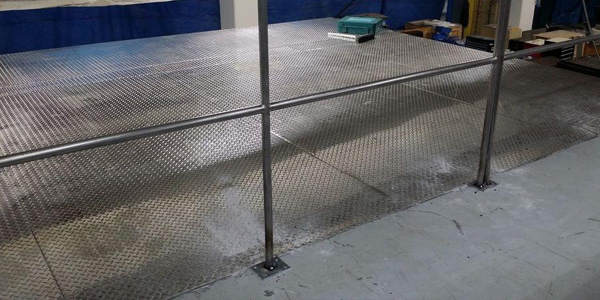
  • Grip Strut Treads: For areas prone to oil, water, or debris, we use serrated diamond-pattern treads. These allow liquids to pass through while providing aggressive traction.

  • Safety Yellow Finishes: We offer high-visibility powder coating or safety-yellow nosing on treads to ensure steps are clearly visible in low-light warehouse conditions.

  • Ergonomic Handrails: Our railings are fabricated to the exact diameter required for a secure grip, with smooth, continuous transitions that prevent snagging.

3. Corrosion Resistance for Harsh Environments

Many industrial stairs are exposed to moisture, chemicals, or the outdoor Ontario climate.

  • Hot-Dip Galvanizing: For outdoor fire escapes or chemical plants, we recommend galvanizing. This metallurgical bond protects the steel from rust for 50+ years.

  • Powder Coating: For indoor facilities, powder coating provides a durable, chip-resistant finish that withstands the bumps and scrapes of daily industrial life.

4. Modular vs. Custom Fabrication

We understand that downtime costs money.

  • Precision Shop Fabrication: By building the staircase in our Toronto shop, we minimize on-site disruption. Most industrial stairs can be installed in a single day.

  • Mezzanine Integration: We can custom-fabricate stairs to integrate perfectly with your existing mezzanine levels, platforms, or catwalks, ensuring seamless transitions.

5. Compliance with Ontario Safety Standards (OHSA)

A non-compliant staircase is a massive legal liability. We ensure every design meets:

  • Correct Rise and Run ratios to prevent fatigue and tripping.

  • Specific Handrail Heights and guardrail spacing.

  • Clearance Requirements for emergency egress routes.

FeatureSteelConcreteWood
DurabilityHighestHigh (but cracks)Low
Installation SpeedFast (1-2 days)Slow (curing time)Moderate
MaintenanceMinimalLowHigh
Fire ResistanceNon-combustibleNon-combustibleCombustible

Built to Work, Built to Last

Industrial stairs are an investment in your facility’s efficiency and your employees’ safety. At Weld Rich & Steel, we bring decades of experience to every industrial project, from simple warehouse access to complex multi-level fire escapes.

The Art of Metal Finishing: A Guide to Aesthetics and Protection

In the world of metal fabrication, the job isn’t finished until the surface is protected. Metal finishing serves two critical purposes: it creates the visual “look” that architects and homeowners desire, and it provides a chemical or physical barrier against corrosion.

At Weld Rich & Steel, we treat finishing as both a science and an art. Whether you are looking for a sleek mirror polish for a lobby or a rugged industrial coating for a fire escape, choosing the right technique is essential.

1. Powder Coating: The Modern Standard

Powder coating is the most popular finish for custom staircases and interior railings in Ontario. Unlike traditional liquid paint, it is applied as a dry powder and then cured under heat to form a hard, “plastic” skin.

  • Durability: Extremely resistant to chipping, scratching, and fading.

  • Aesthetics: Available in thousands of colors and textures, from Sandtex Black (a popular matte, grainy finish) to high-gloss metallics.

  • Eco-Friendly: Contains no VOCs (volatile organic compounds) and produces almost zero waste.

2. Hot-Dip Galvanizing: The “Ultimate” Protection

For exterior structural steel in the GTA, nothing beats galvanizing. The steel is submerged in molten zinc, creating a metallurgical bond.

  • The Benefit: If the surface is scratched, the surrounding zinc “sacrifices” itself to protect the exposed steel from rust.

  • Lifespan: In the Ontario climate, galvanized steel can last 50 to 75 years with zero maintenance.

  • Look: It has a rugged, industrial grey “spangled” appearance. It can also be painted over (a process called “Duplex coating”) for both color and maximum protection.

3. Professional Polishing: The Luxury Finish

For stainless steel and aluminum, polishing is often the preferred method to highlight the natural beauty of the alloy.

  • #4 Brushed Finish: The most common “satin” look, ideal for handrails and kitchen equipment. It hides fingerprints and minor scratches well.

  • #8 Mirror Polish: A reflective, chrome-like finish used for high-end architectural accents.

  • Technique Matters: Achieving a consistent polish across welds requires high-level craftsmanship to ensure the joints are invisible.

[Image showing the difference between powder-coated, galvanized, and polished steel surfaces]

4. Priming and Industrial Painting

While less durable than powder coating, professional priming and painting are still used for large structural beams that will be hidden behind drywall.

  • Shop Primer: A red or grey oxide coating that prevents rust during the construction phase.

  • Field Painting: Often used for massive structures where transport would damage a more delicate finish.

5. Maintenance Tips: Extending the Lifespan

Even the best finish needs a little care to survive Toronto’s salt and humidity.

  • Regular Cleaning: For exterior stainless steel and powder-coated railings, a simple wash with mild soap and water twice a year removes corrosive salt deposits.

  • Inspect the Joints: Rust often starts at the joints or bolt holes. Check these areas annually for any signs of “bleeding” rust.

  • Touch-ups: If a powder-coated surface is deeply gouged to the bare metal, it should be touched up with a matching zinc-rich paint immediately to prevent oxidation from spreading under the coating.

Summary: Which Finish is Right for You?

EnvironmentRecommended FinishMain Benefit
Indoor (Residential)Powder CoatingAesthetics & Scratch Resistance
Outdoor (Structural)Hot-Dip Galvanizing50+ Years of Rust Protection
High-End CommercialBrushed Stainless SteelLuxury Look & Hygiene
Industrial WarehouseSafety Yellow Powder CoatVisibility & Toughness

Conclusion: Beauty That Lasts

A custom-fabricated piece is only as good as its finish. At Weld Rich & Steel, we help you choose a solution that fits your budget, your style, and the environmental demands of your project.

Corrosion-Resistant Alloys: Protecting Exterior Architecture in Ontario

Exterior architectural metalwork in the Greater Toronto Area faces one of the harshest environments in North America. Between the humid summers, sub-zero winters, and the heavy use of de-icing salts on our roads, standard carbon steel can begin to show signs of structural rust within just a few seasons if not properly specified.

At Weld Rich & Steel, we believe that longevity starts at the design phase. Choosing the right corrosion-resistant alloy or treatment is essential for safety, aesthetics, and reducing long-term maintenance costs.

1. Hot-Dip Galvanized Steel: The Industrial Standard

While not technically an alloy, galvanized steel is the most cost-effective solution for exterior structural elements like fire escapes, lintels, and parking garage supports.

  • The Process: Carbon steel is submerged in a bath of molten zinc at approximately 450°C. This creates a metallurgical bond that protects the steel even if the surface is scratched.

  • Why it works for Ontario: It provides “sacrificial protection.” The zinc corrodes before the steel does. In most Canadian environments, galvanized steel can last 50 to 75 years without maintenance.

  • Best for: Fire escapes, exterior staircases, and hidden structural beams.

2. Stainless Steel (Grades 304 and 316)

When aesthetics are as important as durability, stainless steel is the premier choice for modern architecture.

  • Grade 304: Excellent for most outdoor applications. It contains chromium and nickel, which provide a high level of rust resistance.

  • Grade 316 (Marine Grade): If your project is near the waterfront or in an area with high salt exposure (like a busy downtown intersection), 316 is mandatory. The addition of molybdenum makes it highly resistant to the “pitting” caused by chlorides (road salts).

  • Best for: Handrails, glass guardrail standoffs, and visible architectural features.

3. Weathering Steel (Corten)

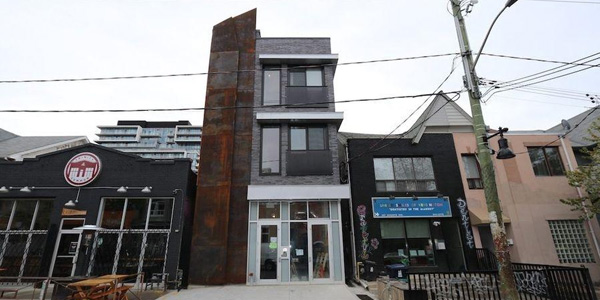
Weathering steel is a group of steel alloys developed to eliminate the need for painting. After a few months of exposure to the elements, it forms a stable, rust-like appearance.

  • The “Patina” Effect: This outer layer of oxidation actually protects the interior steel from further corrosion.

  • Aesthetic Appeal: It is highly popular among landscape architects in Toronto for its organic, earthy look.

  • Best for: Decorative facades, outdoor sculptures, and retaining walls.

4. Aluminum Alloys (6061 and 5052)

Aluminum is naturally corrosion-resistant because it forms an instant aluminum oxide layer when exposed to air.

  • Lightweight Strength: At roughly one-third the weight of steel, it is ideal for rooftop installations or decorative cladding where weight is a concern.

  • Powder Coating: Aluminum takes powder coating exceptionally well, allowing for vibrant colors that won’t peel due to rust underneath.

  • Best for: Modern gates, privacy screens, and lightweight railings.

5. Why “Standard” Steel Fails in Exterior Use

Many contractors try to save money by using standard carbon steel with a simple coat of primer and paint. In the Ontario climate, this is a temporary fix.

  1. Thermal Expansion: The constant freezing and thawing cycle causes paint to develop micro-cracks.

  2. Moisture Trapping: Once water gets under the paint, it stays there, accelerating the “rot” from the inside out.

  3. Salt Damage: Road salt acts as a catalyst for oxidation, turning a small scratch into a structural failure within one or two winters.

Engineering for Permanence

At Weld Rich & Steel, we help our clients navigate these choices based on their budget and the expected lifespan of the project. Whether it’s a CWB-certified fire escape that needs the rugged protection of galvanizing or a luxury storefront requiring the polish of 316 stainless steel, we ensure your exterior architecture stands the test of time.

Request a Quote

File upload — image or sketch