5 Common Mobile Welding Myths Debunked: Professional Quality on the Move

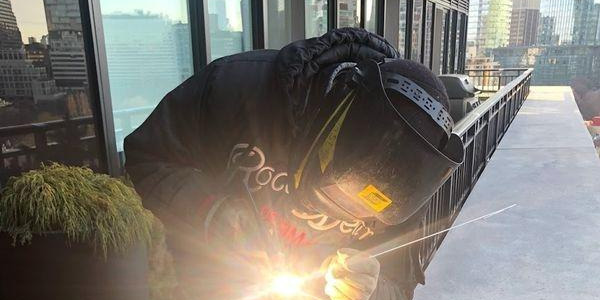
In the fast-paced construction and industrial sectors of the Greater Toronto Area, time is the most expensive commodity. When a structural beam needs modification or a loading dock fails, waiting days for a shop appointment is rarely an option. This is where mobile welding becomes essential.

However, many property owners and project managers still hold onto outdated misconceptions about on-site welding, fearing it lacks the precision of a traditional shop. At Weld Rich & Steel, we’ve seen these myths firsthand. Here is the reality behind the 5 most common mobile welding myths in Toronto.

Myth 1: Mobile Welding is Less Durable Than Shop Welding

The Reality: The strength of a weld is determined by the skill of the technician, the quality of the consumables, and the power of the equipment—not the building it’s performed in.

  • The Professional Standard: Our mobile units are equipped with industrial-grade multi-process welders capable of MIG, TIG, and Stick welding.

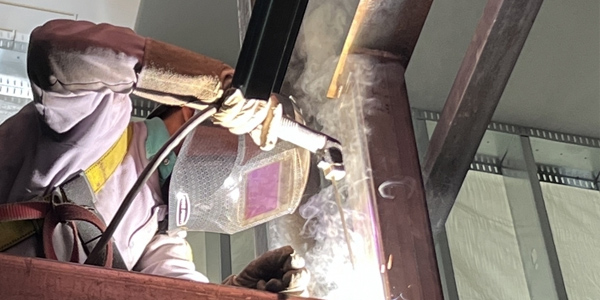
  • Certification: Every on-site weld we perform is done by a CWB (Canadian Welding Bureau) certified welder. Whether we are welding in our North York facility or on a rooftop in downtown Toronto, we follow the exact same CSA W59 structural standards. The bond is just as permanent and secure as if it were done in a factory.

Myth 2: You Can’t Get a “Clean” Finish Outside of a Controlled Environment

The Reality: While it’s true that wind and dust are factors outdoors, professional mobile welders have specialized tools to maintain shop-level aesthetics.

  • Shielding Techniques: We use portable welding screens and tents to block the wind, ensuring that the shielding gas remains stable during the welding process.

  • Specialized Processes: For high-wind environments, we often utilize Flux-Cored Arc Welding (FCAW) or Stick (SMAW), which are naturally more resistant to the elements than standard MIG welding. This allows us to achieve deep penetration and clean beads even in the middle of a Toronto winter.

Myth 3: On-Site Welding is Only for “Small” Repairs

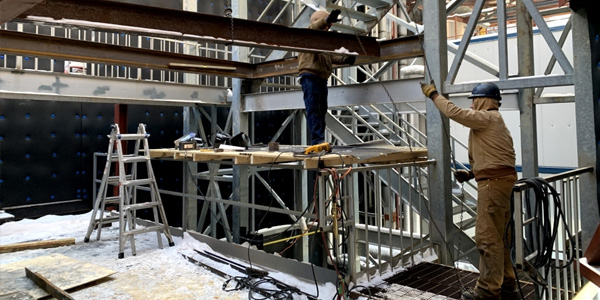
The Reality: Many people associate mobile welding with fixing a broken gate or a lawnmower. In reality, mobile welding is a cornerstone of modern structural steel erection.

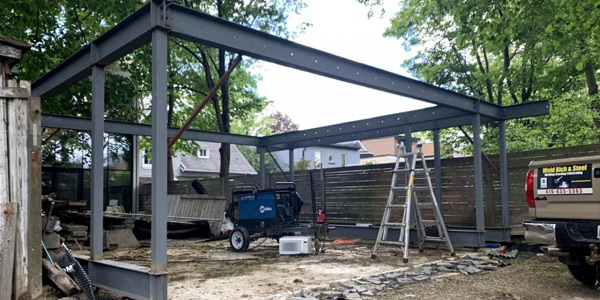
  • Large-Scale Applications: We use our mobile units for heavy-duty tasks, including reinforcing I-beams, installing commercial mezzanines, and welding multi-ton lintels for new window openings.

  • Capacity: Our trucks carry autonomous power generators capable of running high-amperage equipment that can penetrate thick structural steel plates, making us fully independent of the site’s electrical grid.

4. Deep Dive: Safety and Cost Comparisons

When choosing between transporting a piece to a shop or calling a mobile unit, you must weigh the logistical overhead against the on-site setup.

Myth 4: Mobile Welding is More Expensive Than Shop Services

The Reality: While the hourly rate for a mobile unit includes travel and equipment setup, the Total Project Cost is often significantly lower.

  • Eliminating Rigging & Transport: Moving a 20-foot steel beam requires a flatbed truck and often a crane or specialized rigging team. These costs can easily triple the price of a simple repair.

  • Minimizing Downtime: By welding on-site, you eliminate the “transit time.” Your equipment is back in service in hours, not days, which is vital for commercial logistics hubs and production lines in the GTA.

Myth 5: On-Site Welding is a Fire and Safety Risk

The Reality: Safety is the primary concern for any professional welder. Modern protocols make on-site welding extremely safe, even in finished buildings.

  • OHSA Compliance: We follow strict Ontario Occupational Health and Safety guidelines. This includes a mandatory Fire Watch (monitoring the area for 60 minutes after the last arc), the use of fire-rated welding blankets, and portable fume extractors to keep the air clean in enclosed spaces like basements or condos.

  • Public Protection: We use specialized arc-flash curtains to protect the eyesight of employees and pedestrians in busy Toronto areas.

5. Summary: Mobile vs. Shop Welding Comparison

When deciding whether to transport your project to a facility or call for a mobile unit, the choice often comes down to a balance of logistics, cost, and finishing requirements. This summary highlights the key differences to help you choose the most efficient path for your Toronto project.

The Right Solution for Toronto’s Infrastructure

Mobile welding is not a “compromise”—it is a high-tech, efficient solution for modern construction. By debunking these myths, you can focus on what matters: getting your project completed safely, on time, and to the highest engineering standards.
Debunking 6 Common Structural Welding Myths: What You Need to Know

When it comes to the “bones” of your building—the beams, columns, and lintels that hold everything up—there is absolutely no room for error. Structural welding is a highly regulated trade in Ontario, yet several persistent myths continue to circulate among property owners and contractors.

At Weld Rich & Steel, we believe that transparency is the foundation of safety. Here is the truth behind the 6 most common myths in the structural welding industry.

Myth 1: If a Weld Looks “Clean,” It Is Structurally Sound

Many people believe that a smooth, ripple-like weld (often called “stacks of dimes”) is a guaranteed sign of strength.

  • The Reality: Aesthetics can be deceiving. A weld can look perfect on the surface but suffer from a lack of fusion or internal porosity (trapped gas bubbles) underneath.

  • The Professional Standard: Structural integrity is about “penetration”—how deeply the weld metal has fused with the base steel. At Weld Rich & Steel, we prioritize the internal bond over surface-level beauty, often using Non-Destructive Testing (NDT) to verify the core strength of critical joints.

Myth 2: Structural Steel Doesn’t Require Preheating in Summer

A common misconception in Toronto is that preheating is only for the winter months.

  • The Reality: Preheating depends on the steel thickness and ambient humidity, not just the air temperature. Even on a warm July day, thick structural beams can act as a “heat sink,” cooling the weld too rapidly and causing it to become brittle.

  • The Professional Standard: We follow strict CSA W59 guidelines. We use infrared thermometers to ensure the steel is at the correct temperature before the first arc is struck, preventing “delayed cold cracking.”

Myth 3: Any Welder Can Perform Structural Work

Many believe that a general “fabricator” or “handyman with a welder” is qualified to install a load-bearing beam.

  • The Reality: In Ontario, structural welding is legally regulated. An uncertified weld on a load-bearing structure can lead to failed city inspections, the denial of insurance claims, and—in the worst-case scenario—structural collapse.

  • The Professional Standard: All structural work must be performed by a CWB (Canadian Welding Bureau) certified welder under a registered company. This ensures that the technician has been tested in specific positions (flat, vertical, overhead) and that their equipment is up to code.

Myth 4: Welding is Always Better and Stronger Than Bolting

There is a myth that a “permanent” weld is always superior to a bolted connection.

  • The Reality: Engineering is about the right tool for the right job. Bolted connections are often preferred in high-rise construction or areas subject to extreme temperature swings because they allow for thermal expansion and contraction without cracking.

  • The Professional Standard: We follow the engineer-of-record’s specifications. If a joint needs to be rigid and monolithic, we weld it. If it needs to “breathe” or allow for easier future disassembly, we use high-strength structural bolts.

Myth 5: On-Site Welding is a Major Fire Hazard for Homes

Homeowners often fear that bringing a welding arc into their basement or onto their porch will inevitably lead to a fire.

  • The Reality: While the risks are real, they are completely manageable with professional protocols.

  • The Professional Standard: We utilize Fire Watch protocols, where a dedicated team member monitors the area for 60 minutes after the work is done. We also use fire-rated welding blankets, portable fume extractors, and spark shields to ensure your property remains 100% safe.

Myth 6: Structural Welding is “Overpriced” Compared to Wood

Some clients believe that a steel beam installation is an unnecessary expense compared to using engineered wood (LVLs).

  • The Reality: Steel offers a much higher strength-to-weight ratio. Using steel allows for longer spans and thinner profiles, which means you can have a truly open-concept living space without bulky wooden posts blocking your view.

  • The Professional Standard: Steel is a “lifetime” investment. It doesn’t warp, rot, or settle like wood, meaning your floors will remain level and squeak-free for the life of the building.

The Structural Safety Checklist

Before you hire a welder for your Toronto project, ask these three questions:

  1. Are you CWB Certified? (Demand to see their current tickets).

  2. What is your Fire Watch protocol? (Safety is non-negotiable).

  3. Do you follow CSA W59 standards? (This is the “Bible” of Canadian structural welding).

Don’t Compromise on the “Bones” of Your Building

Structural welding is a science, not a hobby. By ignoring these myths and focusing on certified expertise, you ensure that your renovation or new build is safe, legal, and built to last.

Structural Welding: Common Defects and How to Prevent Them

In the world of structural steel, a single faulty weld can lead to costly project delays or, in the worst cases, catastrophic structural failure. Understanding the most common welding defects is essential for project managers, inspectors, and fabricators to ensure the longevity of any construction project in Ontario.

Here is a technical breakdown of the most frequent structural welding mistakes and the professional methods used to fix and prevent them.

Porosity: The “Gas Pockets” Problem

Porosity occurs when gas becomes trapped in the weld metal during solidification, creating small bubbles or “pores.”

  • The Cause: Often due to contaminated base metal (rust, oil, or moisture) or inadequate shielding gas coverage during the FCAW or GMAW process.

  • The Fix: The affected area must be ground out to sound metal and re-welded.

  • Prevention: Proper pre-weld cleaning and ensuring a wind-free environment for on-site mobile welding.

Undercutting: The Weakened Edge

Undercutting is a groove melted into the base metal next to the weld toe that is not filled by the weld metal.

  • The Cause: Excessive current (amperage) or improper welding technique/angle. It effectively thins the structural beam, creating a point of stress concentration.

  • The Fix: Depending on the severity, it requires adding a small stringer bead to fill the groove and restore the metal’s thickness.

  • Prevention: Using the correct travel speed and ensuring the welder is properly qualified for the position.

Incomplete Fusion and Penetration

This happens when the weld metal doesn’t fully fuse with the base metal or doesn’t reach the root of the joint.

  • The Cause: Insufficient heat input or improper joint design (groove angles that are too narrow).

  • The Fix: This is a critical defect. The weld must be completely removed (gouged or ground out) and the joint must be re-prepared and re-welded.

  • Prevention: Strict adherence to Welding Procedure Specifications (WPS) and proper beveling of thick steel plates.

Slag Inclusions

Slag inclusions are non-metallic solids trapped in the weld metal, common in SMAW (stick) and FCAW (flux-cored) processes.

  • The Cause: Failure to properly clean the weld between passes in multi-run joints.

  • The Fix: Grinding out the inclusion until clear metal is visible, followed by a new weld pass.

  • Prevention: Rigorous wire brushing and chipping of slag after every single pass.

Cracking (The Most Serious Defect)

Cracks can be “hot” (occurring immediately) or “cold” (occurring hours or days later).

  • The Cause: Rapid cooling, lack of preheating on thick steel, or hydrogen embrittlement.

  • The Fix: Cracks generally require a full engineering review. The weld must be removed far beyond the visible ends of the crack and re-done with strict preheating protocols.

  • Prevention: Following CSA W59 preheating requirements and using low-hydrogen electrodes.

Why Professional Inspection is Vital

Many of these defects are “sub-surface,” meaning they are invisible to the naked eye. This is why Weld Rich & Steel emphasizes:

  1. CWB Certified Supervisors: To catch technique errors in real-time.

  2. Non-Destructive Testing (NDT): Utilizing Ultrasonic or Magnetic Particle testing for high-load connections.

Need a structural audit? If you are concerned about existing steelwork, our Mobile Welding Services include on-site inspection and repairs.

FAQ: Welding Defects & Repairs

Can a “bad-looking” weld still be structurally sound?

While aesthetics don’t always equal strength, a messy weld often indicates poor technique, which usually correlates with internal defects like slag inclusions or lack of fusion.

How much undercut is allowed in structural steel?

According to CSA W59, the allowable undercut depends on the thickness of the material and whether the load is transverse or longitudinal. Generally, anything over 0.5mm – 1mm requires a closer look.

What is the most expensive defect to fix?

Cracking. It often requires not just a re-weld, but also specialized heat treatment and third-party NDT testing to ensure the integrity is restored.

The Functional and Aesthetic Benefits of Custom Metal Staircases

In modern Toronto architecture, the staircase has evolved from a simple utility into a sculptural centrepiece. Whether you are renovating a historic Victorian home in Cabbagetown or designing a glass-walled custom build in Oakville, a custom metal staircase offers a unique blend of structural permanence and artistic freedom that wood or concrete simply cannot match.

At Weld Rich & Steel, we believe that a staircase should do more than connect two floors—it should define the character of the entire home. Here is why custom steel is the premier choice for the modern GTA property owner.

1. Aesthetic Versatility: From Industrial to Minimalist

Steel is one of the most adaptable materials in the world of design. Because of its high strength-to-weight ratio, we can create structures that look impossibly light and airy.

  • The Mono-Stringer (Floating) Look: By using a single central steel beam, we create “floating” steps that allow light to pass through the entire home. This is the “gold standard” for open-concept living.

  • Intricate Finishes: Unlike wood, which is limited to stains and paints, steel can be powder-coated in any color, chemically blackened for a raw industrial look, or polished to a mirror finish in stainless steel.

  • Material Fusion: Steel pairs perfectly with other high-end materials. We often fabricate steel frames designed to hold thick oak treads, glass-panel railings, or even integrated LED lighting systems.

2. Functional Superiority: The “Lifetime” Structure

Beyond its beauty, a steel staircase is a superior functional investment. Unlike traditional timber stairs, which are prone to environmental changes, a CWB-certified steel structure is built to last centuries.

  • Eliminating the “Squeak”: Wood dries out and shrinks over time, leading to the friction that causes stairs to creak. Steel does not warp, shrink, or settle, ensuring your staircase remains silent for the life of the building.

  • Space Optimization: Because steel is so strong, the supporting structures (stringers) can be much thinner than their wooden counterparts. This frees up valuable square footage underneath the stairs for storage, a home office, or a minimalist walkway.

  • Rapid Installation: Most of the “heavy lifting” happens in our shop. Once the components arrive at your Toronto job site, the primary structure can often be erected and welded in just 1–2 days, significantly reducing the timeline of your renovation.

3. Maximizing Natural Light and Property Value

In many Toronto homes, especially narrow townhouses, the staircase is located in the middle of the floor plan, often blocking natural light.

  • The Transparency Factor: A custom metal staircase with open risers and glass or wire-cable railings acts as a light well. It allows sunlight from front-facing windows to reach the back of the house, making the entire space feel larger and more inviting.

  • A Return on Investment (ROI): Real estate data in the GTA shows that “architectural features”—specifically custom stairs and high-end metalwork—provide a significant boost to a home’s resale value. It is often the first thing a potential buyer sees when they walk through the door.

[Image showing a comparison between a traditional closed wood staircase and an open steel stringer staircase]

4. Engineering Safety and Compliance

A custom staircase is a structural element that must meet the Ontario Building Code (OBC). While a DIY or handyman-built wooden staircase might pass a basic check, a professionally engineered steel staircase offers peace of mind.

  • Precision Engineering: Every staircase at Weld Rich & Steel is CAD-designed and verified for load-bearing capacity. We ensure that every riser and tread is perfectly consistent, reducing trip hazards and ensuring a comfortable “flow” for daily use.

  • Fire Resistance: Steel is inherently non-combustible. In commercial or multi-unit residential settings, a steel staircase provides an added layer of fire safety compared to timber.

5. Summary: Why Choose Custom Metal?

When comparing traditional construction materials to modern structural steel, the advantages in both longevity and design freedom become clear. Below is a breakdown of why a custom metal staircase is a superior long-term investment for your Toronto home.

Your Home Deserves a Masterpiece

Investing in a custom metal staircase is a decision to prioritize both form and function. At Weld Rich & Steel, we combine the grit of industrial welding with the precision of high-end design to create staircases that are truly one-of-a-kind.

Welding vs. Bolting: Which Steel Connection is Right for Your Project?

When designing a steel structure, one of the most critical decisions is how to join the components. The choice between welding and bolting impacts the project’s cost, speed, structural rigidity, and even long-term maintenance.

At Weld Rich & Steel, we utilize both methods depending on the specific requirements of the Ontario Building Code and the site conditions. Here is a technical comparison to help you decide which is best for your construction project.

Welded Connections: Maximum Rigidity

Welding involves fusing two pieces of metal into a single, continuous structure. In structural steel, this is typically achieved through FCAW or SMAW processes.

Key Advantages:

  • Structural Continuity: Welding creates a rigid connection that distributes loads more uniformly, which is often preferred for high-rise frames.

  • Aesthetics: Welded joints are sleek and seamless, making them the superior choice for exposed architectural steel, such as custom staircases and mezzanines.

  • Weight Reduction: Since no gusset plates or heavy fasteners are required, the overall weight of the steel structure can be significantly lower.

Bolted Connections: Speed and Versatility

Bolting involves using high-strength fasteners (typically ASTM A325 or A490 bolts) to connect steel members through pre-drilled holes.

Key Advantages:

  • Ease of Erection: Bolting is significantly faster for on-site assembly. It requires less specialized equipment than field welding.

  • Environmental Resilience: Unlike welding, which requires dry conditions and specific temperatures, bolting can be performed in almost any Ontario weather.

  • Future Modifications: Bolted structures are easier to dismantle, modify, or expand, which is vital for industrial warehouses.

Comparison Table: At a Glance

FeatureWelded ConnectionBolted Connection
StrengthExceptionally high (fused)High (mechanical)
Installation SpeedSlower (requires prep/cooling)Fast (torque-and-go)
On-Site DifficultyHigh (CWB field cert required)Moderate
InspectionComplex (Visual, NDT)Simple (Torque testing)
AestheticsClean, seamlessIndustrial, visible bolts

The Hybrid Approach: Shop-Welded, Field-Bolted

In modern Toronto construction, the most efficient strategy is often a hybrid:

  1. Shop Welding: We weld complex sub-assemblies in our controlled facility under CWB supervision for maximum precision.

  2. Field Bolting: These assemblies are then transported and bolted together on-site for rapid erection.

FAQ

Does the Ontario Building Code prefer one over the other?

Both are accepted under CSA S16. The choice is usually made by the Project Engineer based on load requirements and budget.

Can you weld over a bolted connection?

This is generally avoided. Combining bolts and welds in the same joint requires complex engineering because they share the load differently.

Mild Steel, Stainless, or Aluminum: Which is Best for Your Custom Staircase?

Choosing the right metal for your custom staircase is a decision that impacts the project’s aesthetics, its structural longevity, and—most importantly—your budget. In the Greater Toronto Area, where indoor humidity and outdoor salt exposure are constant factors, material science is just as important as architectural design.

Each has a unique set of properties that make it suitable for different environments. Here is our expert breakdown to help you choose the perfect material for your build.

1. Mild Steel (Carbon Steel): The Versatile Workhorse

Mild steel is the most common material used in both residential and industrial staircases across Ontario. It offers the best balance of strength and affordability.

Why Choose Mild Steel?

  • Cost-Efficiency: Mild steel is significantly more affordable than stainless steel or aluminum, making it the preferred choice for large structural frames and “mono-stringer” stairs.

  • Unmatched Strength: It has a higher “Young’s Modulus” (stiffness) than aluminum, allowing for thinner, more minimalist designs without any structural bounce or vibration.

  • Design Flexibility: It is incredibly easy to weld and manipulate. Whether you want a clean, modern look or an intricate, industrial design, mild steel is the most cooperative medium.

The Maintenance Factor

Mild steel is prone to rust if left untreated. For interior stairs, we recommend a Professional Powder Coating, which provides a durable, furniture-grade finish in any color. For exterior stairs in Toronto, mild steel must be Hot-Dip Galvanized to survive our salt-heavy winters.

2. Stainless Steel: The Premium “Lifetime” Choice

Stainless steel is the ultimate luxury material. It is favoured by architects for high-end Toronto condos and waterfront properties where aesthetics and hygiene are paramount.

Why Choose Stainless Steel?

  • Corrosion Resistance: Because it contains chromium, stainless steel creates a self-healing oxide layer. It will not rust, peel, or flake, even in high-moisture environments like indoor pools or exterior lakeside decks.

  • Aesthetic Appeal: It offers a sophisticated, “high-tech” look. We provide several finishes, from a Satin/Brushed look (which hides fingerprints) to a Mirror Polish for maximum reflection.

  • Hygiene and Maintenance: It is non-porous and incredibly easy to clean, making it the standard choice for commercial buildings and modern, hypoallergenic homes.

The Investment Factor

Stainless steel is a premium product. It requires specialized TIG (Tungsten Inert Gas) Welding and expert polishing, which increases labor costs. However, because it never needs repainting, its long-term “cost of ownership” is often lower than that of painted mild steel.

3. Aluminum: Light, Modern, and Weather-Resistant

Aluminum is often chosen for specific architectural applications where weight is a concern or where a modern, matte aesthetic is desired.

Why Choose Aluminum?

  • Weight Advantages: Aluminum is roughly one-third the weight of steel. This makes it ideal for rooftop patios or older buildings where the floor’s load-bearing capacity is limited.

  • Natural Weather Resistance: Like stainless steel, aluminum does not rust. It is a fantastic choice for external railings and fire escapes that face the brutal Ontario elements.

  • Sustainability: Aluminum is 100% recyclable, making it a popular choice for “Green Building” and LEED-certified projects in the GTA.

The Structural Trade-off

Aluminum is more flexible than steel. To achieve the same rigidity as a steel staircase, the aluminum components must be thicker. It also requires a highly skilled welder, as aluminum is much more heat-sensitive during the fabrication process.

4. Material Comparison Matrix

Choosing the right metal involves balancing your budget with the specific environmental conditions of your Toronto property. This matrix breaks down the core characteristics of each material to help you identify the best fit for your custom staircase project.

5. Summary: Which Metal Should You Choose?

  • Choose Mild Steel if: You are building an interior mono-stringer staircase and want the best “bang for your buck” without sacrificing structural strength.

  • Choose Stainless Steel if: You want a maintenance-free, “showpiece” staircase for a luxury home or a commercial space with high foot traffic.

  • Choose Aluminum if: You are worried about the weight on your structure or need a rust-proof solution for a rooftop or outdoor deck.

Engineering Your Vision

The “best” metal is the one that fits your specific site conditions and design goals. At Weld Rich & Steel, we provide CWB-certified expertise in all three materials, ensuring that whichever metal you choose, the fabrication is flawless and the installation is secure.

Structural Welding in Extreme Environments: Overcoming Ontario’s Winter Challenges

In the Greater Toronto Area, the construction season is no longer restricted to the summer months. As developers push for year-round progress, structural welding in extreme environments—specifically during a harsh Canadian winter—has become a standard requirement. However, welding at -20°C is not the same as welding at +20°C. If not handled by CWB-certified experts, cold-weather welding can lead to catastrophic structural failure, delayed inspections, and massive legal liabilities.

At Weld Rich & Steel, we’ve mastered the specialized engineering protocols required to deliver shop-quality welds in sub-zero conditions. Here is a deep dive into the science, the risks, and the solutions for structural welding in the Ontario frost.

1. The Science of Cold Cracking: The Invisible Enemy

The single greatest danger of welding in the cold is Hydrogen-Induced Cracking (HIC), often referred to as “cold cracking.” This phenomenon occurs when hydrogen atoms get trapped in the crystalline structure of the weld.

  • The Source of Hydrogen: In winter, snow, ice, or even invisible condensation on the steel turns into hydrogen gas the moment the welding arc strikes.

  • The Cooling Trap: In freezing temperatures, the surrounding cold metal acts as a “heat sink.” It pulls heat away from the weld pool so rapidly that the metal transforms into a brittle state known as Martensite.

  • The Result: The trapped hydrogen exerts internal pressure, and because the metal is brittle, it cracks—sometimes hours or even days after the weld was completed. This is why “delayed cracking” is the nightmare of structural inspectors.

The Weld Rich & Steel Solution: We follow strict Pre-Heating Protocols. Using specialized infrared thermometers and propane torches, we raise the temperature of the steel at the joint to at least 10°C to 100°C (depending on the thickness of the steel and the grade). This evaporates all moisture and slows down the cooling rate, allowing the hydrogen to escape safely.

2. Managing the “Heat-Affected Zone” (HAZ)

When you weld, you aren’t just melting the joint; you are changing the properties of the steel around the joint—the Heat-Affected Zone. In extreme cold, this zone is prone to becoming hard and brittle.

  • The Risks of Rapid Quenching: If the air is freezing, the weld is essentially “quenched” (cooled instantly). This destroys the ductility of the steel, making the beam susceptible to snapping under vibrational stress or heavy snow loads.

  • Post-Weld Heat Treatment (PWHT): On critical structural joints, we don’t just stop when the weld is done. We utilize thermal blankets or insulation wraps to slow down the cooling process. By controlling the temperature drop over several hours, we ensure the joint remains flexible and strong.

3. Equipment and Consumable Selection for Sub-Zero Work

Standard welding setups fail in the cold. Shielding gases like Argon or CO2 can struggle to flow correctly, and the gas lines themselves can become stiff and crack.

  • Process Selection: While MIG (GMAW) is great in a shop, it’s often unreliable on a windy Toronto construction site. At Weld Rich & Steel, we often pivot to FCAW (Flux-Cored Arc Welding) or SMAW (Stick Welding) for extreme environments.

  • Low-Hydrogen Electrodes: We use specialized consumables, such as E7018-H4R electrodes. These are designed specifically to minimize hydrogen levels in the weld deposit and are stored in portable ovens on-site to keep them bone-dry.

  • Autonomous Mobile Units: Our trucks carry high-output generators that can handle the increased voltage drops caused by cold weather, ensuring a stable, high-penetration arc at all times.

4. Compliance with CSA W59 and Ontario Building Codes

In Ontario, structural welding is governed by the CSA W59 (Welded Steel Construction) standard. This code has very specific mandates for cold-weather work:

  1. Mandatory Pre-Heat: No welding can be performed on steel colder than -18°C without approved pre-heating procedures.

  2. Environmental Protection: The welding area must be shielded from wind and precipitation.

  3. CWB Certification: Every technician must hold a valid ticket for the specific position and process being used.

Weld Rich & Steel doesn’t just meet these codes; we exceed them. We document our pre-heat temperatures and environmental conditions for every structural joint, giving General Contractors the peace of mind that their project will pass every engineering audit.

5. The Human Factor: Precision Under Pressure

Structural welding requires a steady hand and total focus. It is nearly impossible to maintain a 1mm tolerance when a welder is shivering.

  • Micro-Environments: We set up temporary heated enclosures or “welding tents” for critical on-site work. This protects the weld from the wind and ensures our CWB-certified welders can operate at their peak performance.

Trust the Experts in Extreme Engineering

Winter construction is a reality of life in the GTA, but it shouldn’t be a gamble. By choosing a partner who understands the material science of cold-weather welding, you protect your building, your budget, and your reputation.

Stainless Steel in Construction: Building Structures That Stand the Test of Time

In the demanding climate of the Greater Toronto Area—where structures must withstand humid summers and salt-heavy winters—material selection is the most critical factor in longevity. While carbon steel is the workhorse of the industry, stainless steel is the undisputed champion of durability and low maintenance.

At Weld Rich & Steel, we specialize in integrating stainless steel into both structural and architectural projects. Here is why stainless steel is the ultimate choice for structures meant to last for generations.

1. Unrivalled Corrosion Resistance

The “stainless” property comes from a protective chromium oxide layer that repairs itself in the presence of oxygen.

  • The Toronto Winter Factor: In Ontario, road salt and de-icing chemicals are highly corrosive to standard metal. Stainless steel (specifically Grade 316) is virtually immune to these elements, making it the only choice for exterior railings, fire escapes, and exposed structural components.

  • Zero Rusting: Unlike painted mild steel, stainless steel does not peel or rust if scratched.

2. Structural Strength Meets Slim Profiles

Stainless steel offers high ductility and strength, allowing architects to design thinner, more elegant structures without sacrificing safety.

  • Load-Bearing Capabilities: It maintains its mechanical properties at both extremely high and low temperatures, making it safer in fire-rated environments and during harsh Canadian winters.

3. Low Lifecycle Costs (The ROI)

While the initial investment in stainless steel is higher than that of mild steel, the Total Cost of Ownership is significantly lower:

  • No Painting or Coating: It never needs to be repainted or re-galvanized.

  • Minimal Maintenance: A simple wash with water is usually enough to maintain its lustre for decades.

  • Longevity: A stainless steel structure can easily last 50+ years without requiring structural repairs due to decay.

4. Modern Aesthetics and Hygiene

Beyond its strength, stainless steel is a favourite for contemporary design.

  • Versatile Finishes: From a “brushed” satin look to a “mirror” polish, it reflects light and adds a sense of luxury to any building.

  • Sustainability: Stainless steel is 100% recyclable, making it a key component for LEED-certified and green building projects in Toronto.

The Importance of Professional Stainless Fabrication

Working with stainless steel requires specialized skills. At Weld Rich & Steel, we utilize:

  1. TIG Welding (GTAW): For clean, precise, and aesthetically perfect welds that require no grinding.

  2. Contamination Control: We keep our stainless fabrication area separate from carbon steel to prevent “cross-contamination,” which can cause stainless steel to rust.

  3. Grade Selection: We help clients choose between Grade 304 (for standard interiors) and Grade 316 (for harsh outdoor environments) to ensure the best performance for their budget.

An Investment in Excellence

Choosing stainless steel is a commitment to quality. It tells your clients and future owners that the building was designed with zero compromises on safety or style. At Weld Rich & Steel, we bring decades of CWB-certified expertise to every stainless project in the GTA.

Top 5 Industries That Gain From Mobile Welding Services In Toronto

In Toronto’s fast-paced economy, downtime is the enemy of profitability. When a structural component fails or a production line stops, every hour of delay costs thousands of dollars. Mobile welding (on-site welding) has become a strategic asset for businesses across the Greater Toronto Area, providing shop-quality results directly where they are needed most.

At Weld Rich & Steel, we specialize in CWB-certified on-site solutions. Here are the top 5 industries that gain the most from our professional mobile welding services.

1. Construction and Infrastructure

The construction industry is the primary user of mobile welding. On a busy GTA job site, blueprints often meet real-world challenges that require immediate adjustments.

  • Applications: Structural steel beam (I-beam) reinforcement, column tie-ins, and on-site modifications to architectural metalwork.

  • The Benefit: Instead of sending a massive beam back to the shop for a 2-inch adjustment, our mobile teams perform the work on-site, keeping your project on schedule and passing city inspections.

2. Logistics and Transportation

Toronto is Canada’s primary logistics hub. Loading docks and heavy-duty transport trailers operate 24/7 and take a massive amount of physical abuse.

  • Applications: Repairing loading dock levellers, overhead door tracks, trailer frames, and container reinforcements.

  • The Benefit: A broken dock leveller stops shipping and receiving. Our mobile welders restore functionality on the spot, ensuring your supply chain never breaks.

3. Property Management and Real Estate

Facility managers in Toronto are responsible for the safety of tenants and compliance with strict building codes (OBC).

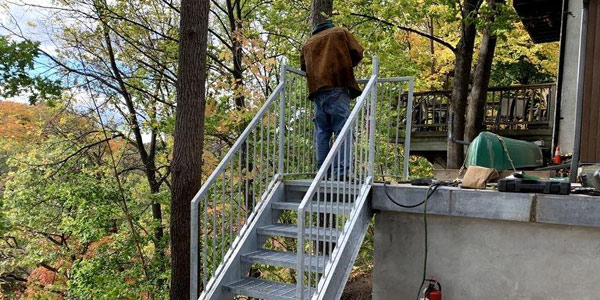
  • Applications: Repairing fire escapes, security gates, commercial railings, and metal stairs.

  • The Benefit: Deteriorating fire escapes are a major liability. We bring them back to code without the need for expensive removal and re-installation, saving property owners thousands in capital expenses.

4. Manufacturing and Industrial Plants

In a manufacturing environment, equipment is often too large or too integrated to be moved to a repair shop.

  • Applications: Conveyor system repairs, machinery frame reinforcement, and stainless steel tank maintenance.

  • The Benefit: Our mobile units are fully autonomous with their own power sources, allowing us to perform high-precision repairs inside your facility without disrupting your entire production cycle.

5. Food Service and Hospitality (HoReCa)

This industry is governed by strict health and safety standards that require flawless metal surfaces.

  • Applications: Stainless steel welding for commercial kitchens, custom shelving, and equipment repairs.

  • The Benefit: We provide sanitary-grade TIG welding on-site, ensuring that every joint is seamless and bacteria-resistant, meeting Toronto Public Health requirements.

Why Choose Weld Rich & Steel for On-Site Work?

We bring the precision of our shop to your location:

  1. CWB Certification: Every weld is performed by a Canadian Welding Bureau-certified professional, ensuring structural safety.

  2. Fully Equipped Units: Our mobile trucks are “shops on wheels,” capable of MIG, TIG, and Stick welding anywhere in the GTA.

  3. Strict Safety Protocols: We adhere to OSHA standards, utilizing fire-watch protocols and protective screens to ensure the safety of your staff and property.

Conclusion: Minimize Downtime with Expert Mobile Welding

Mobile welding is an investment in your business’s uptime. Whether it’s an emergency structural repair or a planned facility upgrade, having a CWB-certified team arrive at your door is the most efficient way to maintain your assets.

Custom Metal Fabrication in Toronto: Deciding Between In-Shop and On-Site Services

Deciding where your custom metal project should be fabricated—in a controlled shop or directly on your job site—is one of the most critical choices for your budget and timeline. At Weld Rich & Steel, we provide both CWB-certified shop fabrication and fully equipped mobile welding units.

Here is how to choose the right approach for your Toronto project.

1. In-Shop Fabrication: Precision and High-End Finishing

Shop fabrication takes place in our specialized facility before the finished components are transported to your site. This is the “gold standard” for architectural metalwork.

Why Choose In-Shop Fabrication?

  • Superior Accuracy: We use heavy-duty CNC plasma cutters and fixed welding jigs that allow for sub-millimetre precision. This is essential for complex designs like spiral staircases.

  • Furniture-Grade Finishes: High-end aesthetics require a dust-free environment. Procedures like Powder Coating or Sandblasting can only be performed in-shop using specialized bake-ovens and booths.

  • Climate Control: Shop work is never delayed by Ontario’s rain or snow. This ensures your project stays on a strict timeline regardless of the season.

  • Complex Material Handling: Specialized metals like thin-gauge aluminum or high-polish stainless steel are best handled in a shop to prevent surface contamination or warping.

2. On-Site (Mobile) Services: Flexibility and Structural Retrofitting

Mobile welding involves bringing the fabrication shop directly to your location. This is often the only viable path for renovations and structural repairs in the GTA.

Why Choose On-Site Services?

  • The “Field Fit” Advantage: Toronto’s historic homes are rarely square. Mobile welding allows us to cut and fit steel in real-time, ensuring a perfect tie-in to existing masonry or timber.

  • Solving Access Issues: If a structural beam is too large for an elevator or a narrow downtown alley, we fabricate it in sections and perform the final high-stress welding inside the building.

  • Emergency Repairs: For broken fire escapes, loading docks, or industrial machinery, we provide immediate structural remediation without the cost of dismantling and transport.

  • Structural Reinforcements: When removing load-bearing walls, welding must happen on-site to ensure the new steel is perfectly shimmed and loaded against the existing structure.

3. Deep Dive: Cost, Quality, and Logistics Comparisons

When weighing these two options, the “best” choice is often a balance of three factors: Cost, Environment, and Inspection requirements.

Budget and Labor Costs

  • In-Shop: Generally offers lower labor costs for repetitive tasks (like building 50 identical brackets) because of assembly-line efficiency. However, you must factor in the cost of professional transport and rigging.

  • On-Site: Labor rates are higher due to travel and the setup of portable equipment. However, you save significantly on logistics, crane rentals, and the time associated with “measuring twice and shipping once.”

Quality Control and Inspections

  • In-Shop: Easier for third-party inspectors to review welds in a comfortable, well-lit environment.

  • On-Site: Requires more rigorous setup, including portable lighting and wind shielding, to ensure CWB (Canadian Welding Bureau) standards are met in the field.

Safety and Public Impact

  • In-Shop: Zero impact on your property or neighbors during the primary build phase.

  • On-Site: Requires strict Fire Watch protocols (monitoring for 60 minutes post-weld) and the use of HEPA-filtered fume extractors in enclosed spaces like Toronto condos or basements.

The Hybrid Solution

Most successful projects in Toronto utilize a hybrid approach: we pre-fabricate the main components in our shop to ensure precision and apply a base finish, then our mobile team performs the final structural “stitch welding” on-site to guarantee a perfect fit.

Request a Quote

File upload — image or sketch