
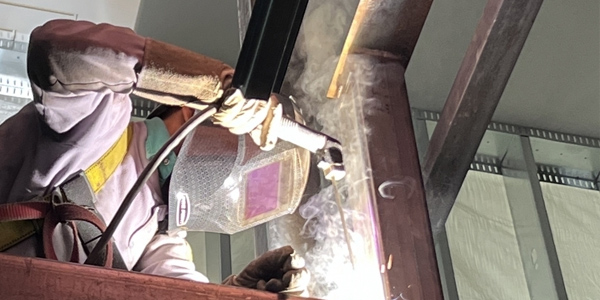
Cold-Weather Structural Welding in Ontario. This guide explains what a project team should clarify before fabrication or field work.
Why conditions matter
Cold steel, moisture and wind can affect welding quality and working conditions. Hydrogen-assisted cracking involves several interacting factors, including hydrogen, a susceptible microstructure and restraint. Ambient temperature alone does not determine a suitable welding procedure.
Use the applicable procedure and specification
Required preheat and interpass temperatures depend on the material, thickness, consumable, joint and applicable qualified procedure. Do not select a temperature from a general blog table. Confirm requirements with the responsible welding and project professionals before work starts.
Control moisture and shielding
Prepare the joint and keep it free from snow, ice and other contamination. Shielding requirements differ between processes and consumables. A windbreak or enclosure may be necessary, but its suitability must be assessed for the actual conditions and safety controls.
Handle consumables correctly
Storage and handling should follow the consumable manufacturer’s instructions and the applicable procedure. Confirm the equipment, power supply and environmental operating limits before scheduling field work.
Cooling control is not automatically PWHT
Post-weld heat treatment is a specified thermal operation. An insulation blanket used to control cooling should not automatically be described as PWHT. Apply heat treatment only where the design, specification and procedure require it.
Coordinate the winter site
Allow for access, ice control, lighting, ventilation, hot-work authorization and the well-being of the crew. Agree the inspection points and documentation with the project team. Weather or unsafe conditions may still require postponement; year-round enquiry availability does not guarantee every job can proceed immediately.
Plan Your Next Project
Explore our commercial structural steel fabrication services and read the related project guide. For a scope review, send your drawings or photographs, project location and required fabrication or installation work.
Reference: CWB company certification. Confirm applicable standards, editions and project requirements with the responsible professionals.