
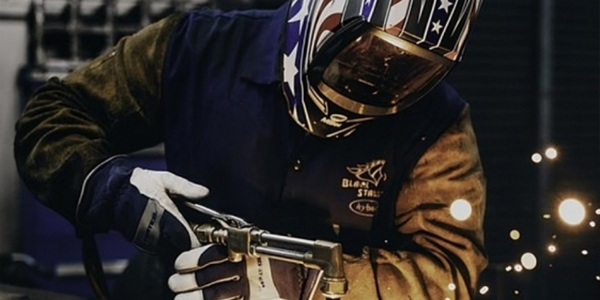
In the commercial sector, operational delays mean lost revenue. When structural assets, handling systems, or heavy machinery fail, the traditional approach—dismantling components and freighting them to a shop—introduces unacceptable logistics friction.
Modern project management requires immediate, on-site solutions. Mobile fabrication rigs deliver factory-grade precision directly to the job site, allowing key industries across the Greater Toronto Area to bypass transit bottlenecks and protect tight timelines.
Heavy Construction & Infrastructure: Real-Time Site Modifications
Real-world site conditions rarely mirror blueprints perfectly. Variations in concrete foundations, tight tolerances, and design revisions often require immediate adjustments to steel elements during erection. General contractors cannot afford to halt crane crews just to send misaligned columns back to a factory.
Field teams solve this by modifying beams and columns on location. Trimming I-beams, altering anchor patterns, or reinforcing splices on the spot is central to modern commercial structural steel fabrication. It ensures physical installations align with engineering designs without delaying secondary trades.
Additionally, with strict Ontario environmental mandates, on-site adjustments significantly reduce material waste. Adapting structural components directly on-site supports the role of structural steel in green building and sustainability by cutting the carbon footprint of extra transport logistics.
| Infrastructure Challenge | Traditional Shop Limitation | On-Site Welding Solution |
|---|---|---|
| Site Discrepancies | Halts installation; requires shipping structural components back for shop re-cutting. | Immediate on-site oxy-fuel cutting, beveling, and re-welding to match actual foundation state. |
| Timeline Pressures | Multi-day delays waiting for shop scheduling queues and transport coordination. | Real-time execution keeps cranes, rigging crews, and secondary trades moving forward. |
Commercial Property Management: Safeguarding High-Traffic Assets
Commercial real estate assets and retail logistics hubs operate under constant physical stress, making structural integrity a matter of operational safety and corporate liability. Property managers frequently face sudden mechanical failures or physical damage to security gates, perimeter fencing, and automated entry systems. Because these components secure commercial boundaries, leaving them compromised while waiting for shop-fabricated replacements exposes the facility to immediate security breaches.
Operational planning: Agree access, isolation, hot-work controls and the required shutdown window with the facility team. Repairs can still affect tenants or production.
Emergency Structural Repairs Across the GTA
For urgent commercial welding enquiries, provide the location, photographs and a description of the problem. Response time, site attendance and the suitability of a repair must be confirmed; do not assume round-the-clock availability.
Logistics & Transport Fleets: Minimizing Highway Downtime
For transport fleets and distribution hubs across the GTA, a truck or trailer sidelined by structural damage represents immediate financial loss. Continuous highway stress, heavy freight loads, and shifting weight frequently cause stress cracks in commercial trailer frames, failed kingpins, or fractured landing gear. Towing an unroadworthy trailer to a distant shop involves high transit costs and extensive administrative delays.
Fleet enquiries: Confirm whether the proposed vehicle/component repair falls within the available scope and qualifications. Work must take place in a safe, authorized location with required inspection and approvals.
Our mobile rigs handle critical fleet maintenance tasks on-site, including:
- Chassis & Frame Reinforcement: Repairing stress fractures along structural trailer rails and crossmembers.
- Coupling System Repairs: Re-welding and reinforcing compromised kingpins and fifth-wheel assemblies.
- Hardware Restoration: Fixing fractured landing gear legs, door hinges, and buckled rear impact guards.
Scheduling these critical structural interventions during off-peak hours or overnight shifts allows transportation companies to keep their distribution networks moving without missing tight delivery windows.
Waste Management & Recycling: Durability Under Severe Wear
Waste management facilities, scrap yards, and recycling plants subject their heavy equipment to extreme, abrasive wear and repetitive impact. Heavy-duty assets like refuse compactors, sorting hoppers, shredder housings, and large steel dumpsters regularly suffer structural fractures under intense hydraulic and mechanical pressure. Because these units are deeply integrated into facility sorting lines or are physically too massive for standard transit, dismantling and shipping them to a traditional repair shop is rarely economically viable.
On-site welding teams resolve these structural failures directly on the tipping floor or processing yard to maintain continuous operation. Mobile technicians use heavy-duty flux-cored arc welding (FCAW) and specialized hardfacing techniques to rebuild worn container hinges, reinforce structural seams on high-capacity compactors, and patch gouged excavator buckets. Selecting the right mobile setup and wire configuration for these high-impact environments relies on understanding the specific metallurgy and mechanical benefits of different trade practices, a topic detailed in our guide on exploring the different types of CWB welding processes.
Protect Your Operations With CWB-Certified Mobile Welding
From structural modifications to heavy equipment hardfacing, ensure your on-site repairs completely satisfy Ontario Building Code requirements and pass municipal engineering inspections. Partner with our elite field crews.
Food Processing & Industrial Manufacturing: Sanitary-Grade Compliance
Industrial manufacturing facilities and commercial food processing plants operate under strict regulatory oversight, where structural modifications must meet precise health, safety, and hygiene codes. Production environments rely heavily on custom stainless steel conveyor systems, mixing vats, and sorting lines. If an equipment mount, frame, or structural bracket cracks, the entire processing floor halts, costing the company thousands of dollars in lost product, compromised batch control, and idle labor.
Field technicians address these emergencies using specialized mobile TIG welding setups configured specifically for sanitary-grade stainless steel and high-purity alloys. They fabricate and repair critical structural equipment supports directly on the production floor, ensuring smooth, crevice-free welds that prevent bacterial buildup and facilitate complete washdown procedures. This precise on-site intervention allows manufacturing plants to restore assembly operations quickly while remaining fully compliant with strict industrial cleanliness standards.
Strict Compliance: Navigating Ontario Quality Standards
Confirm the certification and qualifications required for the scope, together with design, inspection and applicable site safety requirements. No single credential guarantees all project outcomes.
- Safety Risks: Catastrophic structural failure under daily operational loads.
- Financial Liabilities: Invalidated property insurance policies and costly legal exposure.
- Regulatory Penalties: Heavy fines for non-compliance with the Ontario Building Code.
To mitigate these risks, commercial property managers, general contractors, and plant operators must ensure all field modifications strictly follow provincial quality benchmarks.
The Role of CWB Certification
The absolute benchmark for structural compliance in the province is the Canadian Welding Bureau (CWB). Under the Ontario Building Code, any company performing structural steel work must be fully certified.
Working with a company that meets mandatory CWB certification standards Ontario ensures that:
- Engineered Procedures: All welding methods are officially reviewed and approved by professional engineers.
- Calibrated Equipment: Mobile rigs and power sources are regularly tested and calibrated for precision.
- Qualified Technicians: Field welders are individually tested and licensed for the specific positions, processes, and metal thicknesses they work with on-site.
Field Safety and Engineering Standards
Furthermore, structural field repairs must respect strict safety protocols that govern everything from fire prevention during on-site hot work to the metallurgy of the final weld. Adhering to recognized CSA W47.1 standards ensures that mobile welding rigs operate under the same rigorous quality controls as a fixed manufacturing plant.
By partnering exclusively with CWB-certified mobile crews, businesses protect their structural investments, secure their legal compliance, and ensure that every real-time field modification effortlessly passes engineering inspections.
Maximizing Operational Efficiency Across the GTA
On-site structural welding has evolved from an emergency fallback into a strategic asset for modern project management. Whether addressing foundation discrepancies on a major infrastructure project, repairing high-traffic commercial assets, or keeping transport fleets moving, mobile fabrication rigs eliminate the heavy logistics friction and administrative delays associated with traditional shop repairs.
Integrating certified mobile welding services into a long-term maintenance plan allows businesses across the Greater Toronto Area to manage structural failures proactively. Choosing on-site execution directly impacts key operational and financial metrics:
| Operational Metric | Traditional Shop Repair | Certified On-Site Welding |
|---|---|---|
| Asset Downtime | Days to weeks spent on dismantling, shipping, and shop scheduling queues. | Real-time repairs executed in hours, often during off-peak or overnight shifts. |
| Logistics Expenses | High freight fees, crane rental scheduling, and extra transport coordination. | Zero transport costs; fully self-powered mobile rigs arrive directly on location. |
| Regulatory Compliance | Variable field assembly controls after factory delivery. | Certification, welding and inspection requirements confirmed for the specific project. |
By partnering with certified field technicians, companies protect their physical assets, ensure compliance with provincial building codes, and build resilient operations capable of addressing structural challenges instantly.
Plan Your Next Project
Explore our commercial structural steel fabrication services and read the related project guide. For a scope review, send your drawings or photographs, project location and required fabrication or installation work.