structural welding company
Safety Railings & Guards
Code-compliant safety railings and guard systems engineered to protect personnel, equipment, and elevated work areas in industrial and commercial environments across Toronto & the GTA.
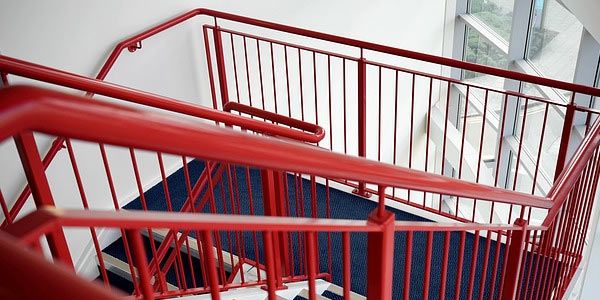
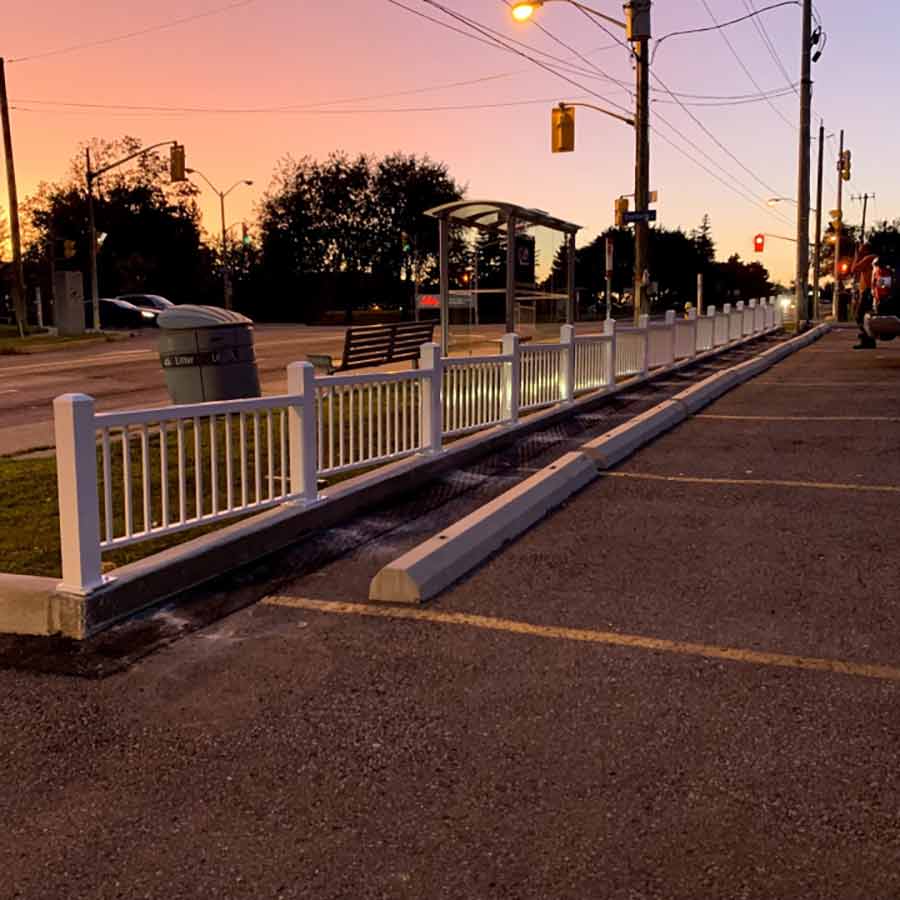
Safety railings and guard systems are a critical form of passive fall protection in commercial and industrial facilities. In Ontario, these systems are required wherever there is a risk of falls from elevated edges, platforms, stairways, rooftops, or equipment areas, making proper design and installation essential for workplace safety and regulatory compliance.
Industrial metal railings and guard systems fabricated by Weld Rich & Steel are designed to protect personnel, equipment, and circulation areas in demanding commercial environments. Each system is engineered to integrate seamlessly with stairs, landings, platforms, rooftops, and operational zones while meeting Ontario Building Code and workplace safety requirements. From perimeter edge protection to machinery and traffic control barriers, every installation is built for durability, visibility, and long-term performance.
Fall protection & perimeter safety systems
Industrial safety railings and guard systems are designed to reduce fall risks, control movement, and protect personnel and equipment in commercial and industrial environments. Below are the safety systems we fabricate and install for high-risk and high-traffic areas.
Steel guardrail systems are installed along elevated edges, open sides, and drop-off zones to provide continuous fall protection in industrial and commercial facilities.
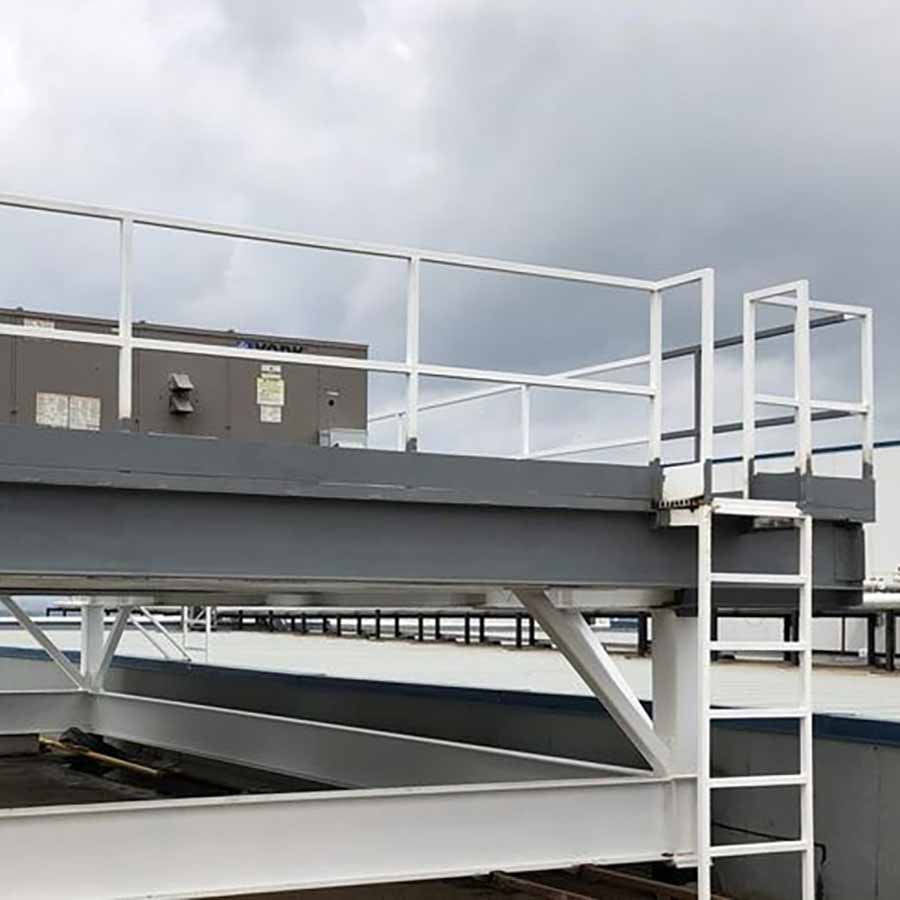
Non-penetrating or fixed rooftop metal railing systems designed to protect maintenance personnel working near roof edges, skylights, and service zones.
Protective barriers are installed around machinery, processing equipment, and operational zones to prevent accidental contact and control access in active work areas.
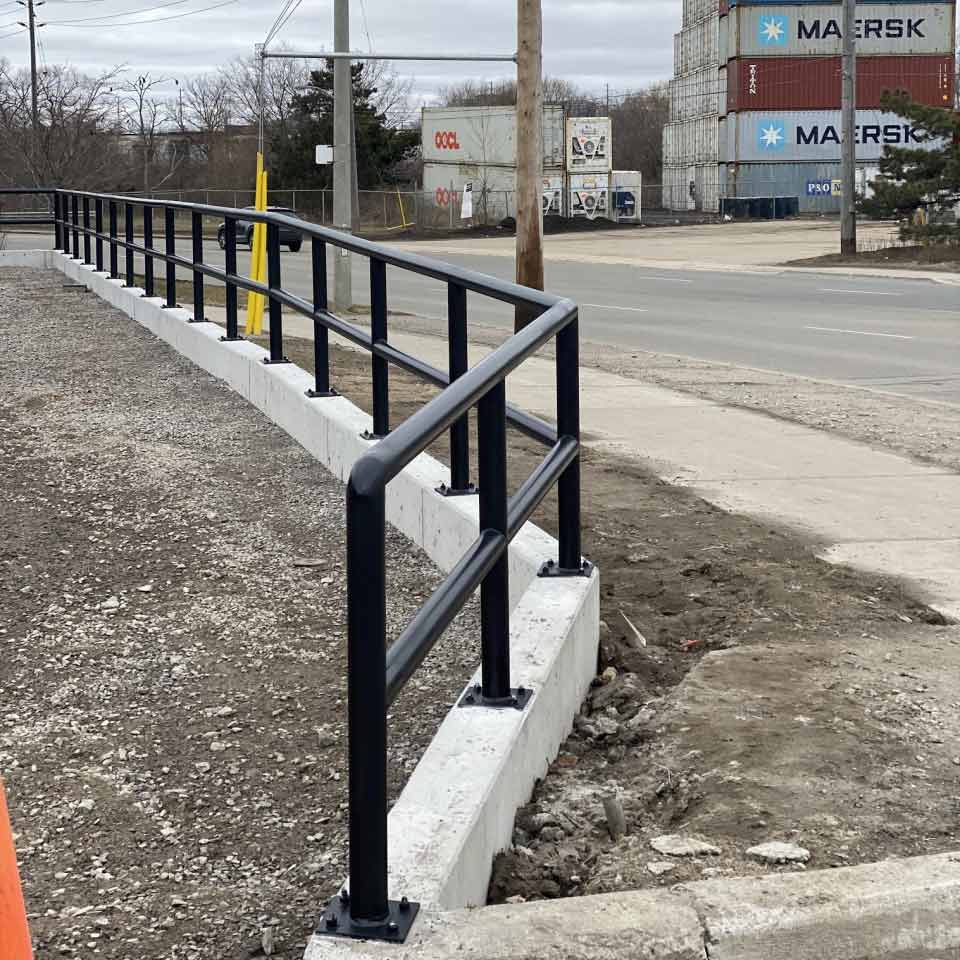
Steel safety barriers are used to separate pedestrian walkways from vehicle paths, forklifts, and moving equipment in warehouses and industrial plants.
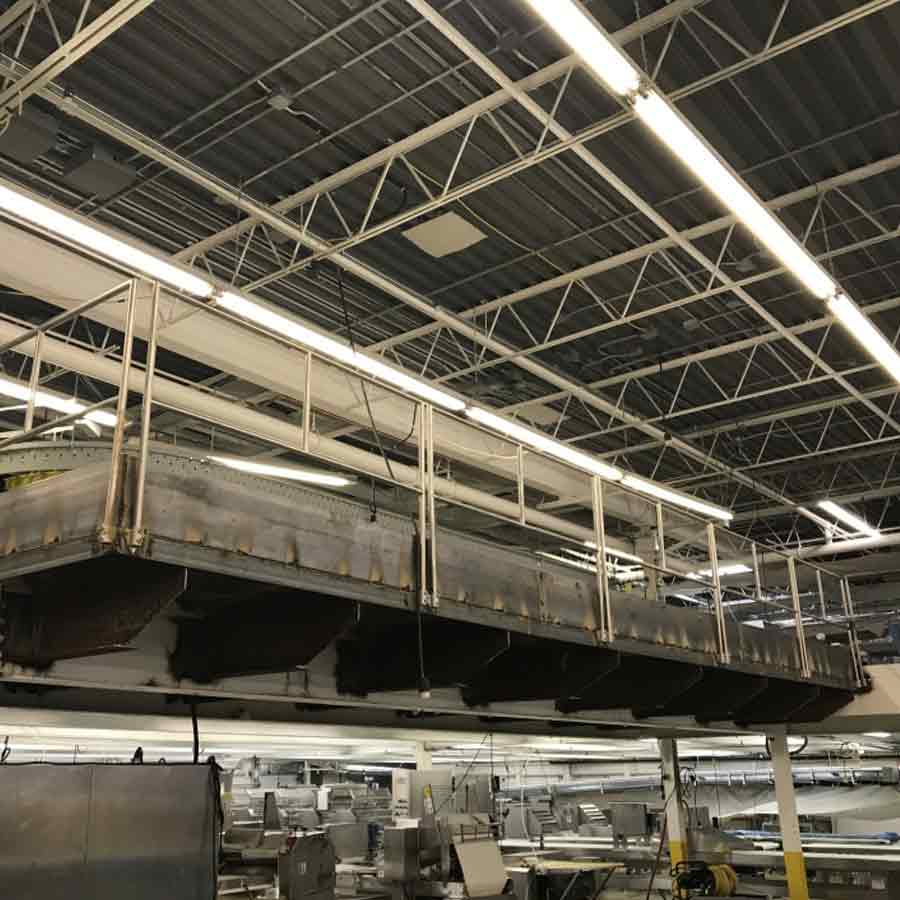
Guard systems installed along platform and mezzanine perimeters to reduce fall risks while maintaining clear visibility and safe circulation paths.
Project-specific guard and railing systems fabricated to address unique site conditions, non-standard layouts, and facility upgrades.
Materials & Styles
Industrial metal railings and guard systems must be fabricated from durable materials and installed using methods that ensure long-term stability, visibility, and compliance in demanding commercial environments.
Structural Steel Components
Material / Profile Type | Application | Key Characteristics |
|---|---|---|
HSS Posts (Square / Rectangular) | Primary guardrail posts | High rigidity, clean appearance, consistent load resistance |
Pipe & Tube Rail Sections | Top and mid rails | Smooth profile, strong impact resistance, good visibility |
Plate Steel Panels | Equipment and machinery guards | Robust protection for high-risk zones |
Custom Welded Assemblies | Non-standard safety systems | Fabricated to suit unique layouts and operational needs |
Mounting & Installation Methods
Mounting Type | Typical Use | Benefits |
|---|---|---|
Surface-Mounted Systems | Concrete floors, slabs, rooftops | Flexible installation, easy retrofit |
Side-Mounted Systems | Elevated edges and platforms | Maximizes usable floor space |
Embedded or Anchored Posts | Permanent installations | High stability for heavy-use areas |
Non-Penetrating Bases | Rooftop safety railings | Protects roof membranes while providing fall protection |
Protective Finishes & Visibility Options
Finish | Indoor | Outdoor | Benefits |
|---|---|---|---|
Standard Shop Primer | Yes | Limited | Temporary corrosion protection |
Powder Coating | Yes | Yes | Durable, high-visibility finish |
Hot-Dip Galvanizing | Yes | Yes | Maximum corrosion resistance |
Safety Colour Coatings | Yes | Yes | Improves visibility in active work zones |
Engineering & Compliance Notes
Key considerations
Safety railings and guard systems must be engineered to reduce fall risks, control movement, and comply with applicable building and workplace safety regulations in commercial environments.
Guard systems must be positioned based on fall exposure, edge conditions, equipment proximity, and pedestrian traffic patterns. Proper placement ensures effective protection without obstructing operations or visibility.
Industrial guard systems must align with the Ontario Building Code and applicable workplace safety regulations, which influence guard height, spacing, strength, and installation methods.
Surface type, edge conditions, and substrate strength affect how guard systems are anchored and supported. Mounting methods must provide long-term stability under impact loads and continuous use.
Guard systems should remain visible, intact, and effective over time. Finish selection, corrosion protection, and routine inspection all contribute to reliable long-term performance in industrial settings.
Gallery
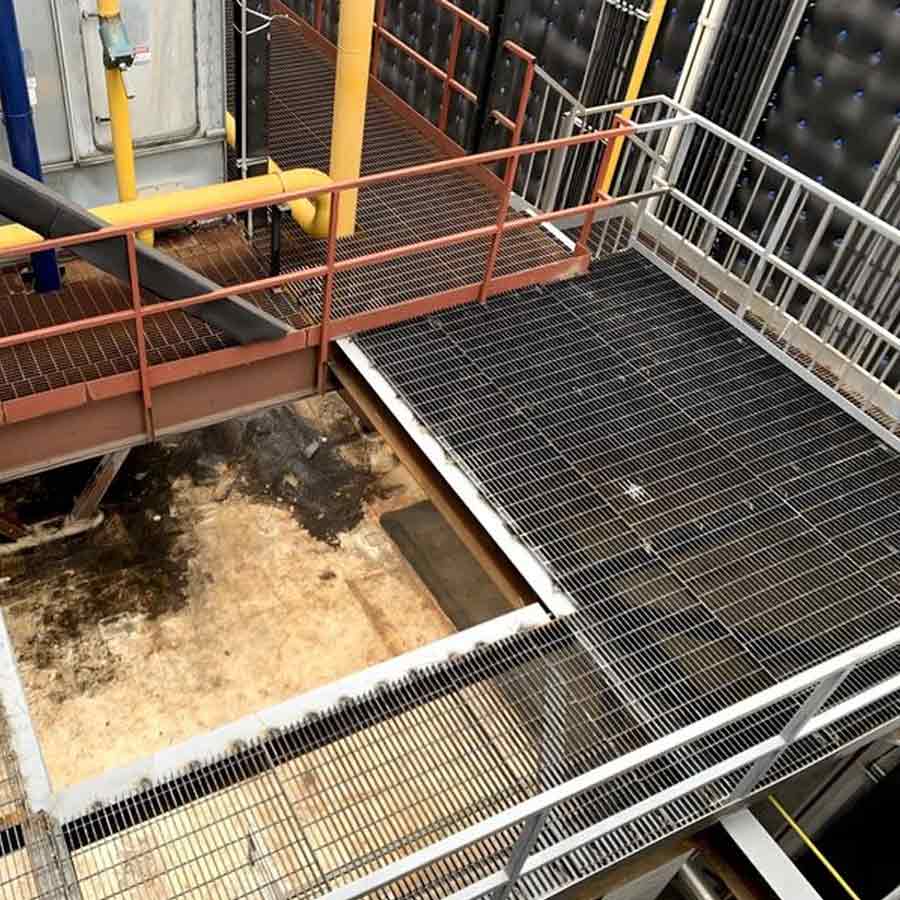
View selected safety railing and guard system installations, showcasing perimeter protection, rooftop safety railings, machinery guards, and traffic control barriers across commercial and industrial facilities in Toronto and the GTA.
FAQ
Safety railings and guards are required wherever there is a risk of falls from elevated edges, platforms, rooftops, or openings. Requirements are defined by the Ontario Building Code and workplace safety regulations, depending on site conditions and use.
Safety railings are designed to protect people from fall hazards and control access along edges and walkways, while equipment guards are installed to restrict contact with machinery, moving parts, or high-risk operational zones.
Yes. Non-penetrating rooftop guard systems can be used where roof integrity must be preserved, provided the system meets stability and safety requirements for the specific application.
Most commercial and industrial guard systems are custom-fabricated to suit site-specific conditions, layouts, and safety requirements, ensuring proper coverage and long-term performance.
Timelines vary based on system complexity and site conditions. Most safety railing and guard projects are fabricated within 1–2 weeks, with installation scheduled to minimize disruption to facility operations.
For structural protection of equipment, machinery, and operational zones, explore our Equipment Supports & Steel Brackets services. Browse all services on our Commercial Structural Steel Fabrication page.
Applications
Industrial safety railings and guard systems are widely used to reduce fall risks, control movement, and protect personnel and equipment in commercial and industrial environments.
Typical commercial and industrial applications include:
Safety railings and guard systems are fabricated to address fall protection, perimeter safety, and controlled access requirements in commercial and industrial facilities, in accordance with applicable Ontario and Canadian regulations. All systems are engineered to align with the Ontario Building Code (OBC), Occupational Health and Safety Act (OHSA), and relevant CSA Group standards for structural steel and safety systems. Fabrication and welding are performed by CWB-certified welders, ensuring consistent quality, durability, and regulatory compliance.
Authoritative references:
Tell us about your project and upload a photo or sketch.
We’ll review the details and contact you shortly.