
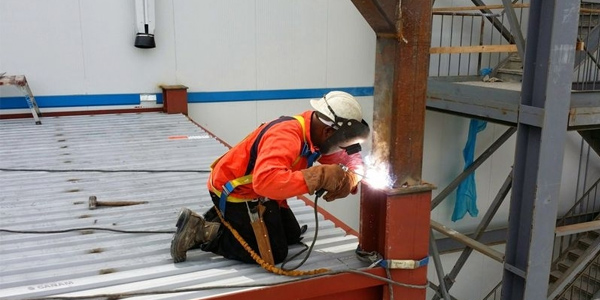
The erection phase is where the precision of the fabrication shop meets the reality of the construction site. Whether it is a small residential renovation or a complex commercial frame, the success of a steel project depends on meticulous planning, rigorous safety protocols, and on-site expertise.
This guide outlines the critical steps and best practices for a seamless structural steel installation, based on our years of experience in the Greater Toronto Area.
1. Pre-Erection Site Planning
Before the first beam leaves our shop, a comprehensive site survey is essential. Even a minor discrepancy in the foundation can lead to significant delays.
-
Anchor Bolt Verification: We verify the placement and elevation of all anchor bolts. Identifying a misalignment at this stage allows for pre-planned adjustments rather than costly “field fixes.”
-
Access & Logistics: In urban environments like Toronto, space is a luxury. We coordinate “just-in-time” deliveries to ensure that steel members are lifted directly from the truck to the structure, minimizing site congestion.
2. Safety Protocols and Rigging
Steel erection is inherently high-risk work. Our protocols under CSA W47.1 and W59 standards prioritize the safety of the crew and the public.
-
Rigging Inspections: All slings, shackles, and cranes undergo daily inspections.
-
Fall Protection: Every team member follows a strict fall-arrest plan tailored to the project’s unique geometry.
-
Stability During Erection: We ensure the structure is adequately braced at every stage of the assembly to withstand wind loads and self-weight before the final connections are made.
3. The Choice of Connection: Welding vs. Bolting
A successful erection strategy often involves a hybrid of joining methods.
-
Field Bolting: Used for the rapid assembly of the primary frame. We utilize calibrated torque wrenches to ensure every bolt meets the specified tension.
-
Field Welding: When maximum rigidity or architectural aesthetics are required, our CWB-certified mobile units perform high-quality field welds, even in challenging on-site conditions.
4. Coordination with Other Trades
Structural steel is the “skeleton” of the building. Its accuracy affects every trade that follows—from masons to glass installers.
-
Tolerance Management: We work within the tight tolerances defined by CSA S16, ensuring that the frame is perfectly plumb and level.
-
Real-time Problem Solving: Our erection teams are equipped to handle architectural adjustments on the fly, keeping the project timeline on track.
5. Summary Checklist for a Successful Project
To ensure your next steel project is a success, keep this checklist in mind:
-
Survey Early: Never assume the foundation is perfect.
-
Plan the Lift: Coordinate crane placement and delivery schedules in advance.
-
Prioritize CWB Certification: Ensure your erection team is as qualified as your fabricator.
-
Inspect Constantly: Document every connection, whether it’s a torque-tested bolt or a visual weld inspection.
FAQ: Structural Steel Erection
How long does the erection phase typically take? It depends on the complexity and tonnage. A simple mezzanine can be erected in a day, while a multi-story commercial frame may take weeks of coordinated lifting.
Can steel be erected in the winter? Yes. In Ontario, we erect steel year-round. However, field welding in the winter requires specific pre-heating protocols to prevent the steel from becoming brittle.
What is the role of a site supervisor during erection? The supervisor ensures that the erection sequence follows the engineered drawings and that all safety and quality protocols are strictly maintained.