
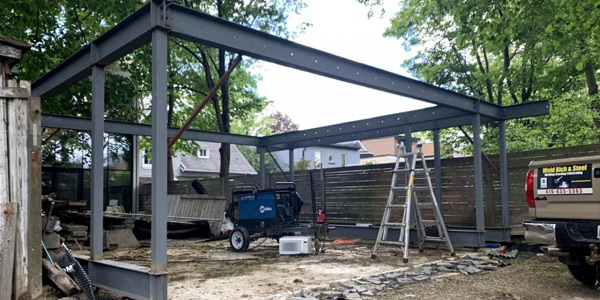
Welded and bolted connections can both serve structural steel projects. The responsible engineer selects the connection for the loads, stiffness, geometry and installation conditions; the joining method alone does not establish strength or rigidity.
Welded Connections
Welding can suit complex assemblies and exposed details, subject to the approved joint design and procedure. Welded connections may still need plates, stiffeners or other components. Welding does not automatically make a connection lighter, rigid or visually seamless.
Plan joint preparation, access, distortion control, coating work and the specified inspection. Field work also needs suitable environmental and safety controls. See our guide to welding defects and inspection.
Bolted Connections
Bolting can simplify site assembly and future disassembly when designed for those needs. Fit-up, hole geometry, access for tools, bolt assemblies and installation requirements must be coordinated before erection.
High-strength bolt grades must be specified correctly. ASTM F3125/F3125M consolidates several former structural bolting standards, including A325 and A490; use the grade and edition required by the project. See ASTM’s specification overview.
Bolting is not simply “torque-and-go.” Installation and inspection depend on the specified joint and method. Weather can affect lifting, access, surfaces and safe work even when no field welding is planned.
Planning Comparison
| Factor | Welding | Bolting |
|---|---|---|
| Structural behaviour | Determined by the complete joint design. | Determined by the complete joint design. |
| Site work | Needs access, approved procedures and environmental controls. | Needs fit-up, tool clearance and specified installation controls. |
| Inspection | Visual inspection and any additional testing required by the project. | Verification of assemblies, surfaces and installation as specified. |
| Appearance | Weld profile and finishing must be agreed; grinding is not automatically appropriate. | Visible fasteners and plates can form part of the architectural design. |
| Future alteration | Cutting or new welding requires an approved alteration plan. | Disassembly may be possible, but re-use and changes still require review. |
Shop-Welded, Field-Bolted Assemblies
A project may combine shop-welded subassemblies with field-bolted connections. For example, a support assembly can be fabricated in the shop and connected on site using the engineer’s specified plates and fasteners.
Coordinate transport size, lifting points, erection sequence, temporary stability and inspection before fabrication. Do not add welds to an existing bolted connection or change connection details without engineering approval.
Discuss Your Steel Fabrication Scope
Review our commercial structural steel services and fabrication workflow. Send current drawings, specifications, location and site dates when you request a scope review.