
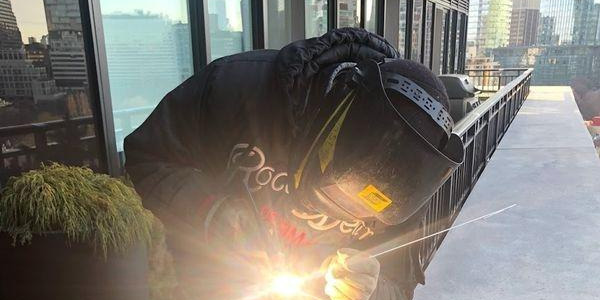
When it comes to the “bones” of your building—the beams, columns, and lintels that hold everything up—there is absolutely no room for error. Structural welding is a highly regulated trade in Ontario, yet several persistent myths continue to circulate among property owners and contractors.
At Weld Rich & Steel, we believe that transparency is the foundation of safety. Here is the truth behind the 6 most common myths in the structural welding industry.
Myth 1: If a Weld Looks “Clean,” It Is Structurally Sound
Many people believe that a smooth, ripple-like weld (often called “stacks of dimes”) is a guaranteed sign of strength.
-
The Reality: Aesthetics can be deceiving. A weld can look perfect on the surface but suffer from a lack of fusion or internal porosity (trapped gas bubbles) underneath.
-
The Professional Standard: Structural integrity is about “penetration”—how deeply the weld metal has fused with the base steel. At Weld Rich & Steel, we prioritize the internal bond over surface-level beauty, often using Non-Destructive Testing (NDT) to verify the core strength of critical joints.
Myth 2: Structural Steel Doesn’t Require Preheating in Summer
A common misconception in Toronto is that preheating is only for the winter months.
-
The Reality: Preheating depends on the steel thickness and ambient humidity, not just the air temperature. Even on a warm July day, thick structural beams can act as a “heat sink,” cooling the weld too rapidly and causing it to become brittle.
-
The Professional Standard: We follow strict CSA W59 guidelines. We use infrared thermometers to ensure the steel is at the correct temperature before the first arc is struck, preventing “delayed cold cracking.”
Myth 3: Any Welder Can Perform Structural Work
Many believe that a general “fabricator” or “handyman with a welder” is qualified to install a load-bearing beam.
-
The Reality: In Ontario, structural welding is legally regulated. An uncertified weld on a load-bearing structure can lead to failed city inspections, the denial of insurance claims, and—in the worst-case scenario—structural collapse.
-
The Professional Standard: All structural work must be performed by a CWB (Canadian Welding Bureau) certified welder under a registered company. This ensures that the technician has been tested in specific positions (flat, vertical, overhead) and that their equipment is up to code.
Myth 4: Welding is Always Better and Stronger Than Bolting
There is a myth that a “permanent” weld is always superior to a bolted connection.
-
The Reality: Engineering is about the right tool for the right job. Bolted connections are often preferred in high-rise construction or areas subject to extreme temperature swings because they allow for thermal expansion and contraction without cracking.
-
The Professional Standard: We follow the engineer-of-record’s specifications. If a joint needs to be rigid and monolithic, we weld it. If it needs to “breathe” or allow for easier future disassembly, we use high-strength structural bolts.
Myth 5: On-Site Welding is a Major Fire Hazard for Homes
Homeowners often fear that bringing a welding arc into their basement or onto their porch will inevitably lead to a fire.
-
The Reality: While the risks are real, they are completely manageable with professional protocols.
-
The Professional Standard: We utilize Fire Watch protocols, where a dedicated team member monitors the area for 60 minutes after the work is done. We also use fire-rated welding blankets, portable fume extractors, and spark shields to ensure your property remains 100% safe.
Myth 6: Structural Welding is “Overpriced” Compared to Wood
Some clients believe that a steel beam installation is an unnecessary expense compared to using engineered wood (LVLs).
-
The Reality: Steel offers a much higher strength-to-weight ratio. Using steel allows for longer spans and thinner profiles, which means you can have a truly open-concept living space without bulky wooden posts blocking your view.
-
The Professional Standard: Steel is a “lifetime” investment. It doesn’t warp, rot, or settle like wood, meaning your floors will remain level and squeak-free for the life of the building.
The Structural Safety Checklist
Before you hire a welder for your Toronto project, ask these three questions:
-
Are you CWB Certified? (Demand to see their current tickets).
-
What is your Fire Watch protocol? (Safety is non-negotiable).
-
Do you follow CSA W59 standards? (This is the “Bible” of Canadian structural welding).
Don’t Compromise on the “Bones” of Your Building
Structural welding is a science, not a hobby. By ignoring these myths and focusing on certified expertise, you ensure that your renovation or new build is safe, legal, and built to last.