
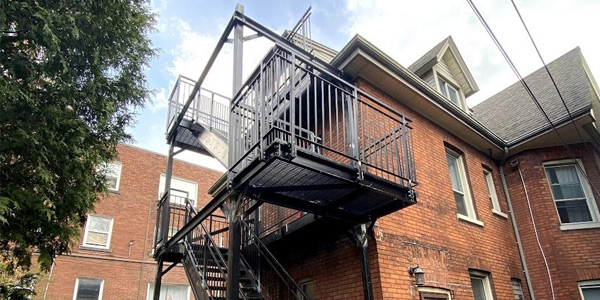
The Critical Role of Emergency Exits in Modern Infrastructure
In the evolving architectural landscape of the Greater Toronto Area, safety is no longer a secondary consideration—it is the bedrock of professional property management. An emergency exit staircase serves as the ultimate fail-safe, a critical artery designed to facilitate the rapid, orderly evacuation of occupants during a crisis. Whether a building is a high-traffic commercial hub in Mississauga or a boutique residential complex in downtown Toronto, the structural integrity and strategic placement of fire escapes are paramount.
The shift toward modern infrastructure requires a move away from traditional, high-maintenance materials toward high-performance solutions found in professional residential metal fabrication. Unlike wood, which is susceptible to environmental degradation, or concrete, which can suffer from internal rebar corrosion (spalling) over time, structural steel provides a unique combination of seismic resilience and fire endurance.
In today’s market, a certified emergency exit is more than a utility; it is a declaration of a property owner’s commitment to life safety. By integrating these systems into the early stages of residential stairs planning, developers can ensure that the “bones” of their building meet the rigorous demands of the 21st century while maintaining a clean, professional aesthetic.
Ensure Your Property is Compliant and Safe
Don’t wait for a Fire Marshal’s notice or a legal liability. Contact our CWB-certified team for a professional consultation and a custom quote for your emergency exit system.
Legal Landscape: Navigating Ontario Building Code (OBC) & Fire Code Canada
Compliance with provincial and federal safety standards is not a suggestion—it is a mandatory legal framework. In Ontario, all structural egress systems must adhere strictly to the Ontario Building Code (Regulation 332/12), which dictates the precise geometry and load-bearing requirements for fire escapes.
To ensure your property passes a fire marshal’s audit, the following technical specifications are generally required under the OBC and Fire Code Canada:
Key Technical Requirements for Emergency Stairs
| Feature | Standard Requirement (OBC/Fire Code) | Why It Matters |
|---|---|---|
| Minimum Width | Usually 900mm to 1100mm (depends on occupancy). | Ensures two-way traffic or stretcher access. |
| Riser Height | Maximum 200mm (7.8 inches). | Prevents tripping and fatigue during rapid descent. |
| Tread Depth | Minimum 235mm to 280mm. | Provides a secure footing for heavy boots or heels. |
| Handrail Height | 865mm to 1070mm above the stair nosing. | Critical for balance and accessibility. |
| Landing Size | Must match the width of the stairs. | Provides a safe "rest area" to prevent stampedes. |
Property owners must also coordinate with building science experts, such as Intertek’s Fire Protection services, to verify that the materials used can withstand specific hourly fire-resistance ratings. Failure to meet these metrics can result in immediate “Order to Comply” notices or high-stakes liability in the event of an injury.
Material Science: Why Structural Steel Outperforms Wood and Concrete
The choice of material for an evacuation system directly affects the “Whole Building Life Cycle Assessment” (LCA). As noted by specialists in Life Cycle Assessment (LCA), the sustainability and long-term durability of a structure are inextricably linked to the materials chosen during the engineering phase.
When it comes to fire safety, structural steel is the undisputed leader for several critical reasons:
Superior Fire Endurance
Unlike timber, which acts as fuel, structural steel is non-combustible. In a fire, it maintains its structural integrity at extreme temperatures, providing the essential time window needed for occupants to exit safely. This reliability is why steel is the standard for both commercial and high-end residential metal fabrication.
Environmental Resilience (The Toronto Factor)
Outdoor exits in Ontario must survive aggressive road salts and extreme freeze-thaw cycles.
The Steel Advantage: When utilized in residential stairs, we use hot-dip galvanizing to create a metallurgical bond that is virtually impervious to rust.
The Concrete Problem: Concrete often suffers from “spalling,” where moisture enters cracks, freezes, and causes the internal rebar to expand and fail.
The Wood Risk: Even treated wood is prone to rot and warping within 10–15 years, making it an unreliable choice for critical life-safety exits.
Sustainability and Circular Economy
Steel is the most recycled material on the planet. By choosing a metal exit system, you reduce the property’s long-term carbon footprint. At the end of its multi-decade service life, every ton of steel can be fully reclaimed and repurposed, supporting a more sustainable building ecosystem.
Build for the Future with Certified Steel
Protect your investment and your occupants with an egress system designed for Ontario's climate. Our structural steel solutions combine CWB-certified strength with modern architectural design.
Contact UsDesign and Engineering for Modern Infrastructure
Modern safety systems should complement a building’s architecture, not detract from it. Through professional metal staircase design, it is possible to bridge the gap between heavy-duty safety requirements and high-end aesthetics.
The Balance of Form and Function
In the past, fire escapes were often viewed as clunky, industrial eyesores. Today, advanced fabrication techniques allow for sleek, minimalist structures that integrate seamlessly with both historic brickwork and modern glass facades.
Visual Transparency: Perforated steel treads or open-grid flooring allow light to pass through, preventing the staircase from casting heavy shadows on interior windows.
Safety in Any Weather: These design choices also serve a functional purpose: they allow snow, ice, and rain to fall through the steps, significantly reducing the risk of slip-and-fall accidents during a Toronto winter.
Custom Finishes: Industrial powder coating provides a durable finish in various colours, such as matte black or architectural grey, ensuring the exit matches the building’s branding while offering maximum scratch and corrosion resistance.
The Importance of Advanced Engineering
Designing a system that must support hundreds of people simultaneously during an emergency requires precise structural calculations. A professional designer must account for “live loads,” wind resistance, and thermal expansion.
Because building codes and engineering standards are constantly evolving, reputable firms rely on continuous professional development. Educational platforms like EPIC Training provide engineers with the latest knowledge in structural analysis and building science, ensuring that every staircase we build is not only beautiful but engineered to the highest safety margins available in 2026.
The Critical Importance of Professional Installation & CWB Certification
In Ontario, the gap between a safe exit and a legal liability often comes down to the quality of the installation. Any structural welding performed on-site must be governed by the Canadian Welding Bureau (CWB) to ensure it meets the safety margins required by the Ontario Building Code.
Professional Installation vs. Uncertified Alternatives
| Feature | CWB Certified Installation | Uncertified / "Handyman" Work |
|---|---|---|
| Structural Integrity | Welds are tested to withstand extreme "live loads" during mass evacuations. | High risk of joint failure under sudden weight or stress. |
| Legal Compliance | Fully meets Ontario Building Code and Fire Marshal standards. | Often fails inspections, leading to fines or "Order to Comply" notices. |
| Liability Protection | Provides property owners with documented proof of due diligence. | Leaves the owner fully liable for any structural accidents or injuries. |
| Corrosion Resistance | Professional residential metal fabrication with industrial primers. | Poorly treated welds often rust within 1–2 years, compromising the frame. |
| On-Site Safety | Strict "Hot Work" permits and fire watch protocols during welding. | Risk of fire or damage to the building during the installation process. |
Why It Matters for Your Property
A fire escape is a structural element that you hope to never use, but it must be perfect if you do. By choosing a certified team, you ensure that every anchoring point and weld bead is engineered for a “lifetime” of service. This professional oversight is a key component of high-quality residential metal fabrication, transforming a technical necessity into a long-term asset.
A Long-Term Investment in Safety
An emergency exit staircase is a feature you hope to never use, but it must be flawless if you do. Investing in a CWB-certified, professionally engineered system is more than just a regulatory requirement—it is a proactive strategy to protect your occupants and secure the long-term value of your real estate.